Australia’s intense sunlight and heat do more than bleach paint. They chemically age roofing materials, accelerating membrane embrittlement, coating breakdown and fastener corrosion. Left unchecked, UV damage creates a cascade of costs such as emergency leaks, interior repairs, higher energy bills and compliance headaches. This article explains the unseen costs of ignoring UV damage in Sydney’s climate and gives strata and property managers practical steps to protect assets, including how Ivy Roofing helps with audits, coatings and compliant insurance repairs.
How UV Radiation Damages Commercial Roofs
UV radiation causes photo oxidative degradation in roofing materials, a process where ultraviolet light breaks down the chemical bonds in polymers and protective coatings. This degradation accelerates in Australia’s climate, where UV exposure levels rank among the highest globally. Research shows that UV exposure causes plasticisers in membranes to migrate out of the material, leaving surfaces brittle and prone to cracking.
The degradation occurs at a molecular level. Paint films lose their protective qualities through a process called chalking, where binders break down and pigment particles become exposed on the surface. Single ply membranes lose flexibility as polymer chains shorten and cross link. Sealants harden and pull away from joints. Coated metal fasteners lose their zinc or polymer protection layers, exposing the base metal to corrosion.
Materials most vulnerable to UV damage include:
Single ply membranes such as TPO and PVC that lack adequate UV stabilisers become brittle over time, developing fine cracks that worsen with thermal cycling.
Bituminous membranes deteriorate when UV radiation breaks down the asphalt binders, causing the surface to become hard and inflexible.
Painted metal sheeting, including prepainted steel roofing, loses its factory coating through UV exposure, first showing colour fading and chalking, then progressing to coating failure and substrate corrosion.
Sealants and flashings made from silicone or polyurethane compounds lose elasticity and adhesion, creating pathways for water entry at critical junctions.
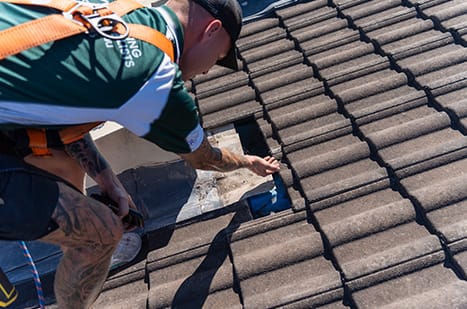
During roof inspections, experienced contractors look for specific signs: surface crazing (fine networks of cracks), paint flaking or powdering, sealant that has hardened and separated from substrates, and fasteners showing corrosion around washer edges. These indicators reveal that UV damage has progressed beyond the cosmetic stage and is compromising weatherproofing performance.
The Hidden Cost Categories
Repair Cascade and Interior Damage
Small UV driven cracks in roof membranes or failed sealants become leak paths during rain events. Water entering through these compromised areas travels along the roof framing and penetrates the ceiling space, often emerging far from the original entry point. By the time a ceiling stain appears, water has typically been entering for weeks or months.
The resulting damage extends well beyond the roof itself. Ceiling tiles or plasterboard require replacement. Insulation becomes saturated and loses its thermal properties. Electrical fixtures may need inspection or replacement if exposed to moisture. Mould growth begins within 24 to 48 hours in damp conditions, requiring professional remediation. Office equipment, stock or tenant fit outs can then sustain damage.
Accelerated Replacement and Lifecycle Shortening
UV damage accelerates the aging process of all roof components, forcing earlier than expected replacement. A properly maintained commercial metal roof in Sydney typically provides 25 to 35 years of service. However, roofs with inadequate UV protection or deferred coating maintenance often require replacement or major rehaul after just 15 to 20 years.
This shortened lifespan has significant financial implications. Capital expenditure budgets must be accessed more frequently. Strata committees face unexpected special levies. The building’s asset value diminishes when due diligence inspections reveal a roof approaching end of life sooner than comparable properties.
Energy and Thermal Impacts
Degraded roof coatings lose their solar reflective properties as UV exposure breaks down the pigments and binders. Dark or weathered roof surfaces absorb significantly more heat than properly maintained reflective coatings. This increased solar heat gain transfers into the building, forcing air conditioning systems to work harder and longer.
The thermal cycling caused by high roof temperatures also stresses building materials. Metal roofs expand and contract with temperature changes. When UV degraded dark surfaces reach 70°C to 80°C on summer afternoons, this expansion and contraction can loosen fasteners, open seams and accelerate fatigue in roof sheeting. Maintaining UV protective coatings helps moderate these temperature extremes and reduces mechanical stress.
Insurance and Compliance Costs
Insurance providers increasingly scrutinise roof maintenance records when assessing commercial property claims. Buildings with documented evidence of deferred maintenance or missing condition reports may face claim disputes or premium increases. Some insurers explicitly require regular roof inspections as a condition of coverage for commercial properties.
Where leaks occur and insurers determine that poor maintenance contributed to the damage, claims may be reduced or denied entirely. The building owner or strata scheme then bears the full cost of both roof repair and consequential interior damage. Even where claims are paid, properties with repeated water damage claims typically face premium increases at renewal.
Non compliant roof work creates additional financial exposure. If original or previous contractors cut corners and installed systems that fail to meet National Construction Code requirements, rectification becomes the current owner’s responsibility. Strata schemes have faced unexpected costs when building certifiers identified non compliant roof installations during major works applications.
Regulatory penalties add to the burden. SafeWork NSW issues on the spot fines for roofing work conducted without proper safety systems. Penalties for working at heights without appropriate controls start at several thousand dollars per offence.
Programme and Access Costs
Reactive repairs triggered by UV damage cost more than planned maintenance programmes because of repeated mobilisation expenses. Each emergency call out requires scaffolding or elevated work platform hire, traffic management, safety documentation and contractor mobilisation. When these visits occur three or four times annually rather than as part of one planned intervention, costs multiply.
Example Cost Comparison – Prices are examples only. Speak to the Ivy Roofing team for an accurate quote for your needs.
Reactive approach over three years:
- Four emergency leak repairs at $3,500 each = $14,000
- Scaffolding and access for each visit = $8,000
- Interior damage repairs across three incidents = $12,000
- Total: $34,000
Planned approach over three years:
- Single comprehensive condition assessment = $1,500
- Protective coating application = $15,000
- One planned maintenance visit annually = $4,500
- Total: $21,000
The planned approach in this example costs 38 percent less while providing better protection and avoiding tenant disruption. The figures are provided for illustration only, but the principle holds across most commercial properties: planned intervention delivers better value than repeated reactive repairs.
Sydney and NSW Compliance and Safety Implications
NCC Weatherproofing and Roof Cladding Rules
The National Construction Code sets performance requirements for roof and wall systems that must prevent water penetration that could cause unhealthy or dangerous conditions, loss of amenity or deterioration of building elements. These requirements apply whenever roofs are replaced or substantially refurbished.
Roof cladding and weatherproofing systems must comply with relevant Australian Standards including AS 1562.1 for metal roof cladding. When UV damage necessitates membrane replacement or substantial re roofing, the new installation must meet current Code requirements for weatherproofing, drainage capacity and structural adequacy. Simply replacing like with like may not satisfy current standards if the original installation predates Code updates.
This compliance obligation can increase project scope and cost. A property intending to patch a small membrane area may discover during inspection that broader compliance upgrades are needed. Building certifiers may require drainage upgrades, sarking installation or flashing modifications to meet current weatherproofing standards. Budget conscious strata committees should request comprehensive condition assessments that identify potential compliance issues before committing to works.
SafeWork NSW and Roof Safety
Any work undertaken to address UV damage including coating application, membrane replacement or anchor installation falls under SafeWork NSW requirements for managing fall risks. The Work Health and Safety Regulation 2017 requires persons conducting a business or undertaking to eliminate fall risks where possible or control them through the hierarchy of controls.
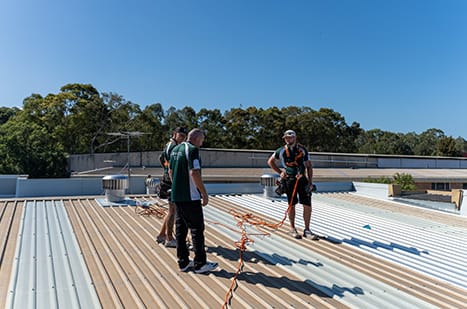
For commercial roof work, this typically means installing temporary edge protection systems that comply with AS/NZS 4994 before workers access the roof. Edge protection must include top, mid and bottom rails or toeboards with specified gap dimensions and load capacities. Where work involves fall risks greater than two metres, a Safe Work Method Statement must be prepared, site specific and made available to all workers.
Roof anchor points used for fall arrest or restraint systems must be designed and installed by appropriately qualified persons and tested in accordance with relevant standards. Annual inspection and testing certificates must be maintained. Properties without current anchor test certificates face delays and additional costs when roof work becomes urgent.
Electrical hazards from overhead powerlines add complexity to roof access. SafeWork guidance specifies minimum approach distances depending on voltage and materials being handled. Roofs near powerlines require additional risk assessment and control measures.
Budget estimates for any roof work must include these safety requirements. Temporary edge protection hire or installation can add $3,000 to $8,000 to project costs depending on building size and duration. Anchor installation and certification typically costs $800 to $1,500 per anchor point. Contractors who quote without accounting for these requirements may later advise of variations, so strata managers should request detailed breakdowns showing safety system costs.
Documentation to Keep
Proper documentation reduces insurance claim friction and demonstrates compliance with work health and safety obligations. Building managers should request and retain:
Condition reports with photographic records showing the roof status before and after works.
Safe Work Method Statements for high risk construction work including the specific controls implemented.
Roof anchor test certificates showing current compliance with testing requirements and the next due date.
Product specifications and warranties for coatings, membranes and other installed materials.
Contractor licences and insurance certificates confirming workers compensation and public liability coverage.
Inspection logs recording dates, findings and actions from routine maintenance visits.
These records prove that owners or strata schemes exercised reasonable care in maintaining the property. When insurers assess claims or SafeWork inspectors attend after incidents, comprehensive documentation supports the building manager’s position and reduces dispute risk.
Prevention and Mitigation Playbook
Inspection Frequency
Visual checks by on site staff or building managers should occur monthly or quarterly, depending on roof age and complexity. These brief inspections identify obvious issues such as debris accumulation, blocked drainage points or visible damage before they escalate.
Professional condition assessments by qualified roofing contractors should occur every two to five years as general guidance. Properties with roofs older than 15 years, those with known UV sensitive materials or buildings with a history of leaks benefit from more frequent professional assessment. These comprehensive inspections include safe roof access, detailed examination of all components and photographic documentation.
Condition assessments provide strata committees with accurate information for capital planning. Rather than waiting for emergency repairs, committees can budget for protective coatings, targeted component replacement or full refurbishment based on actual condition rather than age alone.
Protective Coatings and Reflective Systems
Solar reflective and UV stable coatings extend roof life by protecting underlying materials from photo oxidative damage while reducing heat absorption. Quality commercial roof coatings typically reflect 70 to 90 percent of solar radiation compared with 20 to 40 percent for aged or dark roof surfaces.
Product selection matters significantly. Coatings should be specified with appropriate UV stabilisers, compatibility with the existing substrate and warranties appropriate for commercial use. Installation by qualified applicators using manufacturer approved methods ensures performance. Improperly applied coatings may fail prematurely and cost more to rectify than professional application.
Recoating cycles depend on the coating system and exposure conditions. Most commercial elastomeric coatings provide effective protection for 10 to 15 years before requiring renewal. Buildings in especially exposed locations or with low pitch roofs that receive intense solar exposure may need more frequent attention.
Targeted Repairs and Sealant Replacement
Early intervention on localised UV damage prevents progression to widespread failure. When condition assessments identify specific areas of sealant deterioration, flashing degradation or membrane cracking, targeted repairs address these problems before water entry occurs.
Sealant replacement represents one of the most cost effective preventive measures. Critical junctions such as roof penetrations, flashing terminations and expansion joints rely on sealant integrity. When UV exposure causes sealant to harden and lose adhesion, moisture can enter with each rain event. Systematic sealant renewal every 8 to 12 years keeps these vulnerable points protected.
Flashing repair or replacement follows similar logic. Metal flashings with UV degraded coatings should be recoated or replaced before substrate corrosion compromises weatherproofing. This work typically costs hundreds to low thousands of dollars compared with tens of thousands when leaks cause interior damage.
Anchor and Safety Checks
Before any roof work proceeds, anchor systems must be inspected and certified as current. Annual testing by competent assessors verifies that anchors can withstand the required loads. Properties should maintain a register of anchor locations, test dates and next inspection due dates.
Where anchors are found deficient or where none exist, installation by qualified installers brings the property into compliance. While this involves upfront cost, it enables future maintenance to proceed safely and legally. Anchors typically outlast the roof membrane with proper maintenance, representing a one time investment that supports decades of access.
SafeWork requirements also mandate that edge protection or other fall prevention controls be considered before resorting to harness based systems. Properties with permanent parapets, guard rails or other passive protection systems reduce the complexity and cost of accessing roofs for routine maintenance.
Maintenance and Staged Capital Planning
Forward planning transforms roof management from crisis response to strategic asset preservation. Strata committees and property managers should develop multi year maintenance schedules that anticipate coating renewals, component replacements and eventual re-roofing.
A typical staged plan might include:
- Years 1 to 3: Routine inspections, minor repairs, gutter cleaning and drainage maintenance.
- Years 4 to 6: Protective coating application to extend membrane life and improve thermal performance.
- Years 7 to 10: Comprehensive condition assessment, targeted membrane repairs and sealant renewal.
- Years 11 to 15: Re-coating or partial membrane replacement in high exposure areas.
- Years 16+: Planning and budgeting for full roof replacement based on condition assessment.
This staged approach spreads costs across multiple budget cycles, avoids the need for large emergency levies and maintains the roof in good condition throughout its service life. Buildings that defer all maintenance until failure occurs face compressed timelines, limited contractor choice and maximum disruption.
Commercial Roof UV Damage Quick Checklist
- Professional condition assessment every 2 to 5 years depending on roof age and condition
- Regular visual checks by on site staff monthly or quarterly or by a roofing expert
- Plan re coat or protective coating programme using solar reflective products where appropriate
- Keep Safe Work Method Statements, anchor certificates and inspection logs on file
- Budget for staged maintenance to avoid repeated access and scaffolding costs
- Address sealant and flashing deterioration before leaks develop
- Ensure anchor systems are tested and certified current before any roof work
- Review insurance policy requirements for roof maintenance and documentation
Why Strata Managers and Property Managers Should Choose Ivy Roofing
Ivy Roofing delivers comprehensive commercial roofing services designed to reduce both obvious and hidden costs through proactive management and compliance first delivery.
Condition Audits and UV Risk Reports
Detailed roof condition assessments provide photographic documentation of current status, identification of UV damage and degradation, and lifecycle advice for capital planning. These reports give strata committees the information needed to make informed decisions about maintenance timing and scope. Property managers receive clear recommendations prioritised by urgency and cost impact.
Coating Application and Membrane Work
Ivy Roofing specifies and installs UV-resistant coatings and membrane systems suited to Sydney’s climate. Product selection considers substrate compatibility, expected service life and thermal performance. Certified installation by experienced crews ensures coatings perform as intended. Warranties backed by quality applications give property managers confidence in protection longevity.
Leak Investigation and Emergency Repairs
When leaks occur despite preventive measures, rapid response limits interior damage and business interruption. Ivy Roofing’s leak investigation service identifies water entry points even when ceiling damage appears far from the source. Emergency repairs use proven methods to restore weatherproofing quickly while permanent solutions are planned.
Roof Anchor Installation and Certification
Compliance with SafeWork NSW requirements begins with properly designed and tested anchor systems. Ivy Roofing installs anchors that meet AS/NZS 5532 requirements and arranges annual testing and certification. This documentation demonstrates compliance and enables future maintenance to proceed without delay.
SWMS and Compliance Paperwork
Every commercial project receives a site specific Safe Work Method Statement addressing the identified hazards and required controls. This documentation satisfies regulatory requirements and reduces insurer friction when claims occur. Clear communication of safety procedures protects workers and building occupants.
Staged Replacement Planning and Tender Ready Specifications
Strata committees planning major roof works receive comprehensive scope documentation suitable for competitive tendering. Ivy Roofing provides bill of quantities, performance specifications and indicative programme timelines. This planning support helps committees budget accurately and avoid repeated reactive expenditure.
With over 20 years of experience in commercial and strata roofing across Sydney, Ivy Roofing understands the specific challenges property managers face. The company’s approach combines technical expertise, compliance knowledge and practical communication to deliver outcomes that protect assets and control costs.
Take Action to Protect Your Commercial Roof
UV damage progresses silently until leaks, emergency repairs and tenant disruption force action. Property managers and strata committees who invest in condition assessments, protective coatings and planned maintenance avoid the cascade of hidden costs that follow neglect.
Don’t wait for visible leaks to discover that UV damage has compromised your roof’s integrity. A comprehensive condition assessment identifies vulnerabilities while preventive measures remain cost effective.
Call 02 9674 4556 or visit Ivy Roofing Commercial Services to arrange your assessment.
This article provides general guidance only. For specific roofing advice and professional inspections, contact Ivy Roofing’s licensed specialists. Always prioritise safety and use qualified professionals for roof work.