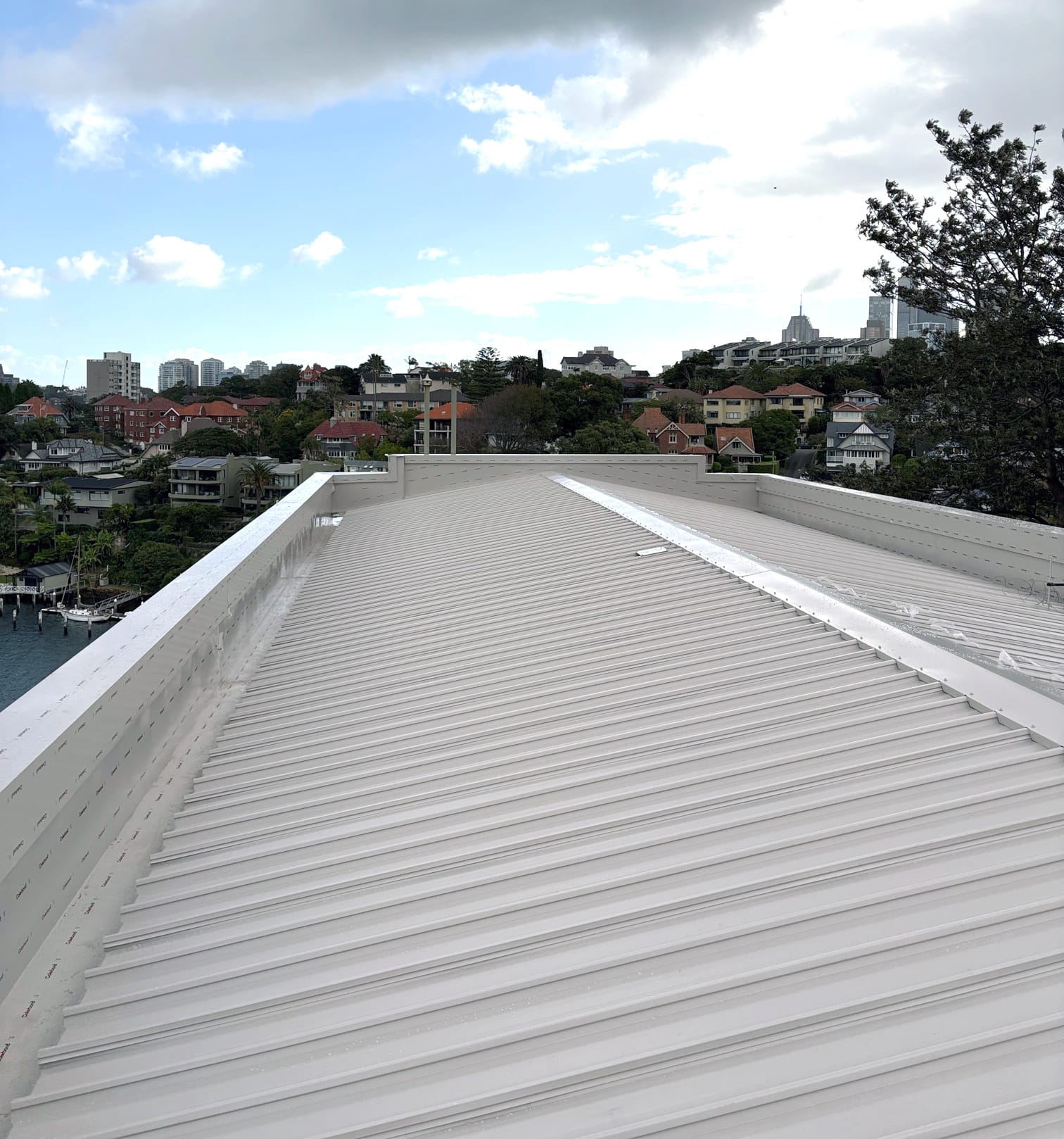
Summer electricity bills spike for many Sydney office buildings, but the roof often gets overlooked. A roof that’s faded, ponding water, missing flashings or poorly insulated doesn’t just let rain in. It raises indoor temperatures, forces HVAC systems to run longer and shortens the roof’s life. Australian studies show reflective “cool” roofs and good roof maintenance can lower cooling demand significantly, and a small investment in roof condition can pay back quickly in lower operating costs. This post explains the links, the compliance considerations in Sydney, and the practical steps property managers can take with Ivy Roofing as the delivery partner.
How Roof Condition Affects Cooling Loads
Understanding the physics is straightforward. Solar radiation hits your roof surface and depending on the colour and condition, that surface either reflects the heat or absorbs it. When a roof absorbs heat, the surface temperature rises dramatically. That heat then conducts through the roof membrane and insulation into the building below, forcing your HVAC system to work harder to maintain comfortable temperatures.
Two properties matter most: albedo (reflectivity) and emissivity (how efficiently the surface radiates heat away). A dark, degraded roof might have an albedo of just 0.15, meaning it absorbs 85% of solar radiation. A fresh cool roof coating can achieve albedo values of 0.85, reflecting 85% of that heat instead.
If Sydney implemented cool roofs city wide, studies show energy consumption for cooling residential and commercial buildings would decrease by up to 40% in total. During summer, a building in Western Sydney requires double the energy to cool down compared to the same building in Eastern Sydney, making roof condition especially critical for western suburbs properties.
Hidden Cost Pathways from Poor Roof Condition
The connection between roof condition and operating costs runs deeper than immediate cooling energy. Poor roof condition creates five compounding cost pathways that property managers need to understand.
1. Thermal Transfer and Insulation Loss
Faded coatings and dark finishes create an immediate thermal penalty. As roof surfaces age, protective coatings break down and reflectivity drops. A roof that started white can fade to grey or develop dark staining, dramatically increasing solar absorption. The temperature difference is measurable. Studies show dark conventional roofs can reach surface temperatures over 10°C hotter than cool roofs during summer.
Leaks and moisture infiltration compound this problem by reducing insulation effectiveness. When roof insulation becomes wet, its R value drops significantly. Wet insulation also increases latent cooling load as HVAC systems must remove humidity as well as sensible heat.
2. Degraded Coatings and Lost Reflectivity
UV exposure, weather and time all degrade roof coatings. As protective layers break down, the underlying membrane becomes exposed to direct solar radiation. This accelerates aging and increases heat transfer. Research indicates that ponding areas on roofs experience 40 to 60% faster deterioration than properly draining roof sections.
The heat magnification effect is particularly damaging. Standing water acts as a lens, intensifying ultraviolet radiation damage to the membrane below. Dark debris that collects in ponded areas absorbs heat and creates thermal stress points on the membrane.
3. Ponding Water and Membrane Degradation
Water that remains on a roof for more than 48 hours after rainfall creates multiple problems. The standing water itself adds structural load. A 100 square metre ponding area at just 25mm depth adds 2,500 kilograms to the roof structure. More critically, ponding accelerates membrane breakdown through several mechanisms.
Photo oxidation occurs when sunlight passes through the water and concentrates UV damage. Hydrolysis weakens membrane materials, especially at seams. Freeze thaw cycles in cooler months cause expansion and contraction that create micro cracks. Buildings with ponding water show 60% higher likelihood of experiencing interior leaks compared to properly draining roofs.
Energy studies demonstrate that facilities with significant roof ponding issues experience 15 to 25% higher HVAC costs. Part of this stems from reduced membrane reflectivity where water sits. Dark organic matter accumulates in ponding areas, creating hot spots that transfer additional heat into the building.
4. Moisture, Ventilation and HVAC Inefficiency
When roof leaks allow moisture into the building, several efficiency losses occur. Wet insulation loses thermal resistance. Humidity loads increase, forcing HVAC systems to work harder in dehumidification mode, which consumes substantial energy. Poor roof ventilation compounds these problems by trapping heat and moisture in roof spaces.
Indoor air quality suffers as well. Mould and mildew growth in damp roof spaces and insulation creates health concerns and potential liability. The remediation costs for mould damage can quickly exceed the cost of proper roof maintenance.
5. Access Costs and Repeated Repairs
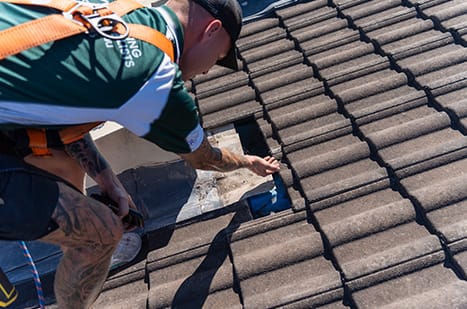
Reactive maintenance multiplies costs in ways that don’t appear on roof invoices. Each emergency repair requires scaffold or safety equipment installation, traffic management, after hours premiums and tenant disruption. Multiple small repairs cost far more than planned maintenance.
Most manufacturer warranties explicitly exclude ponding water damage. Review of major manufacturers’ warranties shows 85% contain specific ponding water exclusions. When insurance claims are denied due to deferred maintenance, building owners bear the full replacement cost.
Sydney Compliance and Safety Requirements
Property managers cannot ignore compliance when planning roof works. NSW requirements affect both cost and project scheduling through specific technical standards and safety protocols.
National Construction Code Requirements
The NCC establishes performance requirements for weatherproofing that all roof replacements and major refurbishments must meet. Part F3 of NCC 2022 states that roofs and external walls must prevent water penetration which could cause dangerous conditions, loss of amenity or dampness and deterioration of building elements.
When replacing roof cladding or membranes, the new installation must comply with current NCC standards. This includes compliance with AS 4654.1 for membrane materials and AS 4654.2 for the installation of waterproofing systems on flat roofs and roof terraces. Non compliant materials or installation methods create rework liability.
NCC 2025 introduces additional waterproofing provisions. The updated code requires improved drainage design with minimum slopes of 1:80 (12.5mm per metre) for effective water shedding. Roof space ventilation requirements now extend to climate zones 4 and 5, covering coastal NSW, to ensure adequate airflow and mitigate condensation related damage.
These compliance requirements matter because they influence material selection, installation methods and documentation needs. Property managers should request compliance statements and test certificates from contractors. Building certifiers can provide interpretation guidance when scope questions arise.
SafeWork NSW Roof Work and Edge Protection Rules
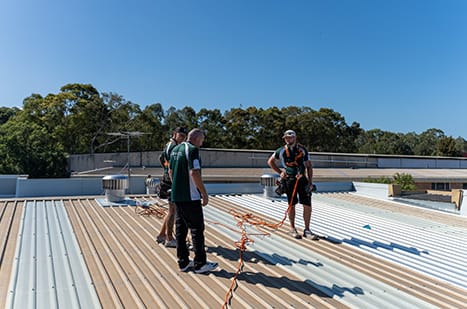
SafeWork NSW regulations govern how roof work must be conducted safely. Falls from heights remain the number one cause of traumatic fatalities in the NSW building and construction industry. Most serious and fatal falls occur from heights under 4 metres, making even low rise commercial buildings subject to strict controls.
Work Health and Safety Regulation 2025 requires specific control measures. For any construction work where fall risk exceeds 2 metres, a Safe Work Method Statement (SWMS) must be prepared before work commences. The SWMS must identify hazards, specify control measures and detail how those measures will be implemented and monitored.
Physical edge protection represents the preferred control under the hierarchy of controls. Where work near roof edges cannot be eliminated, temporary edge protection systems must be installed according to AS/NZS 4994.1 and 4994.2. These systems require:
- Top, mid and bottom rails or toe boards with clear gaps not exceeding 450mm
- Toe boards or mesh infill to prevent falling objects unless exclusion zones are established below
- No gap between roof edge and guardrail exceeding 100mm
- Installation by persons with required competencies following manufacturer specifications
Fall arrest systems using harnesses and anchors may only be used after risk assessment determines that edge protection is not reasonably practicable. Any fall arrest anchors must be load tested and certified. Licensed scaffolders or riggers must install anchor systems, and certification documentation must be available on site.
These requirements directly affect project costs and scheduling. Scaffold installation, anchor testing certification, SWMS preparation and safety supervision all add to base roofing costs. Projects must allow adequate time for safety equipment installation and worker induction. Summer work may face additional scheduling constraints due to heat safety protocols.
What This Means for Procurement
Property managers should build compliance into project scopes from the start. Request that contractors provide:
- Site specific SWMS before work commencement
- Proof of anchor testing and certification where fall arrest systems are used
- Scaffold design documentation and erection certificates
- Method statements for working near roof edges and fragile materials
- Photographic condition reports for audit and insurance purposes
- Compliance statements confirming NCC requirements have been met
Itemise these compliance elements as separate line items in quotes. This transparency helps strata committees and building owners understand true project costs and enables proper budget allocation for both energy efficiency upgrades and safety compliance.
Practical Prevention and Upgrade Actions
Property managers have clear pathways to reduce summer cooling costs through improved roof condition. The key is matching intervention level to building needs and staging investments appropriately.
Quick Wins: Low Cost, Immediate Impact
Start with actions that deliver results within existing maintenance budgets:
Monthly visual inspections by on site staff can catch developing problems early. Check for:
- Standing water 48 hours after rain
- Blocked gutters, downpipes and roof drains
- Loose or lifted flashings around penetrations
- Debris accumulation on roof surfaces
- Visible membrane damage or blistering
Quarterly maintenance tasks extend roof life and maintain performance:
- Clear all gutters, outlets and sumps of leaves and debris
- Check and reseal flashings and penetration seals
- Tighten any loose fasteners on metal roofs
- Remove any vegetation or biological growth
- Document findings with dated photographs
Annual contractor inspections provide professional assessment. Specify that inspections include:
- Comprehensive photographic condition report
- Drainage performance evaluation
- Membrane integrity assessment
- Reflectivity measurement where possible (albedo testing)
- Prioritised repair recommendations with cost estimates
These routine actions prevent small issues from becoming expensive failures. Buildings with structured inspection and maintenance programs typically achieve 25 to 40% longer roof life than those relying on reactive repairs alone.
Medium Term Upgrades: Targeted Performance Improvements
When roof condition assessment reveals specific deficiencies, targeted upgrades deliver measurable returns:
Cool roof coatings offer excellent value for metal and existing membrane roofs. Modern solar reflective coatings can restore aged roofs to near original performance. Energy payback often occurs within 2 to 4 years for buildings with high cooling loads.
Drainage improvements address ponding before it causes membrane failure. Solutions include:
- Additional sump drains in low points
- Tapered insulation to create positive drainage paths
- Enlarged or upgraded existing drains
- Secondary overflow systems for extreme weather events
Insulation upgrades deliver dual benefits. Improved roof insulation reduces both cooling loads in summer and heating costs in winter. When coupled with cool roof coatings, insulation upgrades can achieve cooling energy reductions of 30 to 45% compared to poorly insulated dark roofs.
Targeted repairs in ponding areas extend roof life. Rather than full replacement, strategic membrane patching and reinforcement in problem areas can add years of service life at a fraction of replacement cost.
Long Term Strategy: Planned Replacement and Integration
Eventually, every roof requires replacement. Smart property managers plan ahead to maximise the investment:
Staged re-roofing smooths capital expenditure. Rather than replacing an entire 5,000 square metre roof in one year, staged approaches spread cost across 2 to 3 budget cycles while addressing the worst sections first.
Performance upgrades during replacement cost less than retrofit. When replacing membrane, concurrent improvements deliver better value:
- Upgraded insulation to exceed minimum NCC requirements
- Cool roof membranes or coatings as standard specification
- Improved drainage design and additional outlets
- Integrated anchor points for future maintenance access
- PV ready design if solar installation is planned
Photovoltaic integration requires careful coordination. Solar panels can increase local roof temperatures if not properly designed with adequate ventilation gaps. However, panels also provide shading that reduces cooling load for the roof area they cover. Work with designers who understand the thermal interactions.
Monitoring and Assessment Intervals
- Monthly: Visual checks by building staff using simple checklist
- Quarterly: More detailed inspection of vulnerable areas
- Annually: Professional contractor inspection with a comprehensive report
- Every 2 to 5 years: Professional thermal survey and condition assessment, with frequency increasing for roofs over 15 years old
These intervals represent guidance based on typical commercial roof performance. Adjust frequency based on roof age, known issues and building usage patterns. High value properties or those with temperature sensitive tenants may justify more frequent assessment.
Why Strata and Property Managers Choose Ivy Roofing
Managing commercial roof assets requires a partner who understands both technical performance and business realities. Ivy Roofing brings specialist expertise to the cooling cost challenge through services matched to a property managers’ needs.
Roof Cooling Impact Audits
Before investing in upgrades, property managers need clear information about potential returns. Ivy Roofing’s cooling impact audits provide decision-ready data:
- Surface temperature mapping using infrared thermography
- Reflectivity measurements (albedo readings) across roof zones
- Drainage performance assessment and ponding documentation
- Insulation condition evaluation
- Simple energy impact estimates based on building characteristics
- Prioritised recommendation list with ROM costings
These audits give strata committees and asset managers the evidence needed to approve expenditure. Reports are structured for non technical audiences and include clear before and after scenarios.
Cool Coating Application and Re-Coating
Ivy Roofing installs warranted solar reflective coating systems appropriate for Sydney commercial buildings. Services include:
- Substrate preparation and cleaning to achieve proper adhesion
- Membrane repair and preparation prior to coating
- Application of cool coat systems meeting specified performance criteria
- Post application testing and certification
- Warranty documentation for building records
Cool coating projects typically complete quickly with minimal tenant disruption. Many applications can proceed while buildings remain fully occupied, avoiding the costly downtime associated with full re roofing projects.
Drainage Remediation and Ponding Solutions
When ponding causes energy waste and membrane degradation, targeted drainage solutions arrest the damage:
- Engineering assessment of drainage adequacy
- Additional outlet installation in optimal locations
- Tapered insulation design and installation
- Gutter and downpipe upgrades
- Overflow system installation for code compliance
- Sump and cricket construction for complex roof geometries
Drainage projects prevent premature roof failure while immediately reducing the HVAC penalty from ponding areas. The investment protects both the membrane asset value and the annual operating budgets.
Staged Replacement and Maintenance Contracts
Capital works budgets don’t always align with roof replacement needs. Ivy Roofing works with property managers to structure financially sustainable solutions:
- Multi year staged replacement programs that address urgent areas first
- Preventive maintenance contracts that extend roof life and defer replacement
- Budget aligned scheduling that fits committee approval cycles
- Flexible scope options that balance immediate needs against long term strategy
Staged approaches recognise that a 10 year old roof in good condition requires different treatment than a 25 year old roof with multiple leak points. Ivy Roofing’s assessment process identifies which roof sections justify preservation versus replacement.
Sydney Experience and Commercial Capability
Ivy Roofing operates throughout Sydney with experience in commercial, strata and institutional projects. Maintaining capacity for projects from small office buildings through to large multi tenancy commercial properties.
Local knowledge matters in commercial roofing. Understanding Western Sydney’s more extreme summer temperatures versus coastal areas, familiarity with common building types and construction periods, relationships with Sydney based product suppliers and experience with local certifiers and authorities all contribute to project success.
Next Steps: Your Roof Cooling Impact Audit
If rising summer electricity bills concern you, start with a professional assessment of your roof’s contribution to cooling costs. Ivy Roofing’s cooling impact audit delivers actionable information in a format designed for property managers and strata committees.
Contact Ivy Roofing to schedule your roof cooling impact audit or request an itemised quote for roof improvements. Call 02 9674 4556 or visit our commercial services page to discuss how your roof affects your cooling costs.