A tenant calls to say there’s a damp patch spreading across the ceiling tiles near the lift lobby. It’s the third call like that this month. If you manage commercial property in Sydney, this scenario probably sounds familiar, and it usually shows up right around now, in the middle of winter, when the rain just won’t let up.
Here’s the thing, though. By the time a leak shows up inside the building, it’s usually been happening for weeks, sometimes months, on the roof itself. The ceiling stain is just the part you can see.
Why Sydney’s Winter Rain Exposes Roofing Problems Fast
Sydney gets rain throughout the year, and periods of sustained or repeated rain can expose weaknesses in a commercial roof that may not be obvious during shorter periods of rainfall. Water can work its way through small membrane splits, degraded flashing, and seals that have quietly failed over a few years of UV exposure and temperature changes.
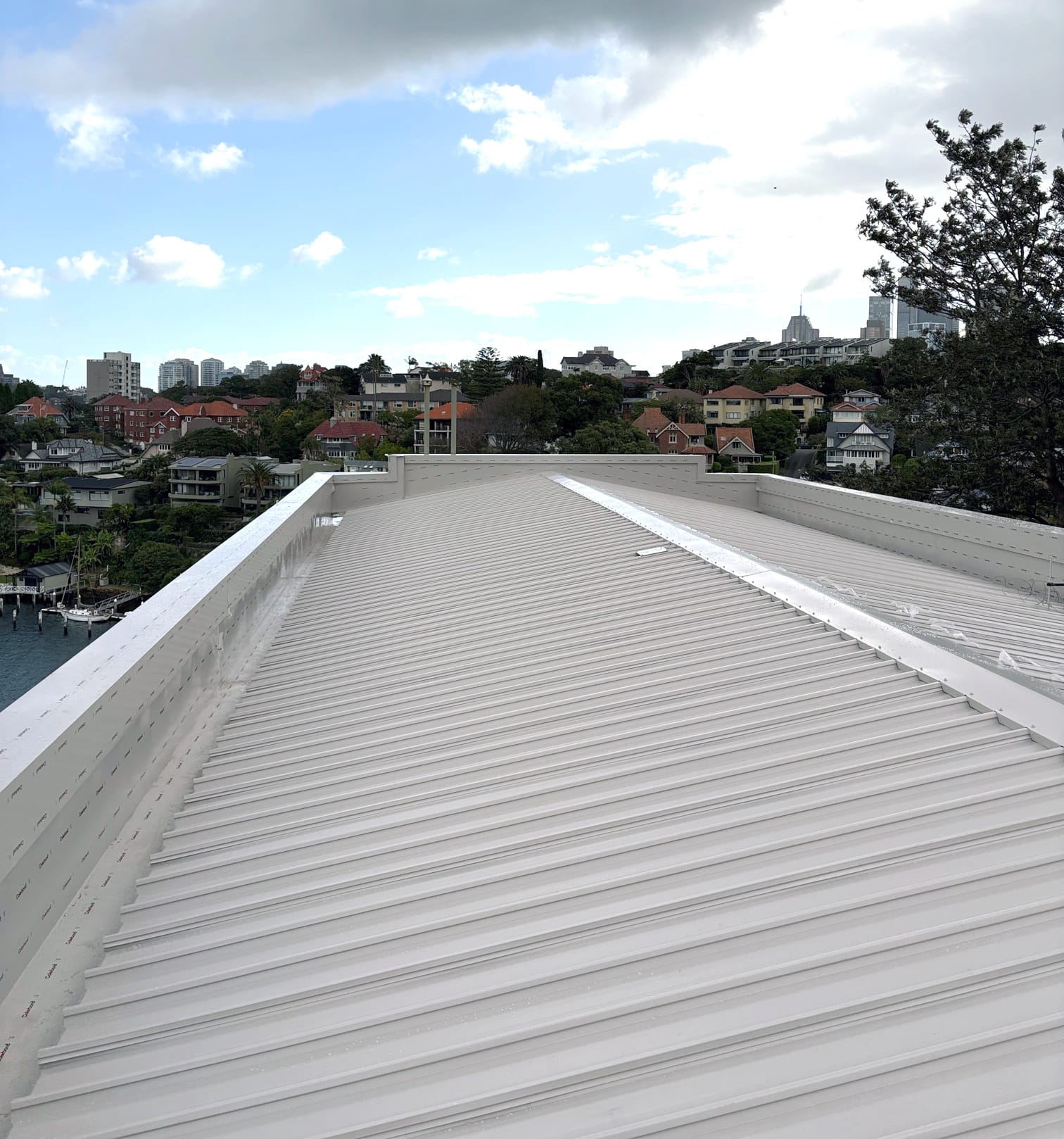
Commercial roofs across the Inner West, the CBD fringe, and industrial pockets around places like Alexandria and Botany can be particularly vulnerable where buildings have flat or low-pitch roofs. Low-pitch roofing relies heavily on membrane integrity and effective drainage to manage water properly. There’s no steep pitch to shed water quickly if something’s not sealed right.
The Real Cause Is Rarely Where the Damage Shows Up
This is the bit that catches a lot of property managers out. Water doesn’t necessarily travel straight down. It can move along structural members, follow the underside of decking, and can travel several metres before it ever drips through a ceiling tile. So the stain in the lobby might actually be tracing back to a failed penetration seal near the plant room, or a blocked internal drain on the opposite side of the roof.
Trying to fix the visible damage without tracing the actual source is a classic shortcut, and it’s one we see a lot when buildings have had patch repairs done by someone in a hurry. It might hold for a season. It might hold temporarily, but if the source hasn’t been properly identified and repaired, the problem can return.
What Proper Leak Detection Actually Involves
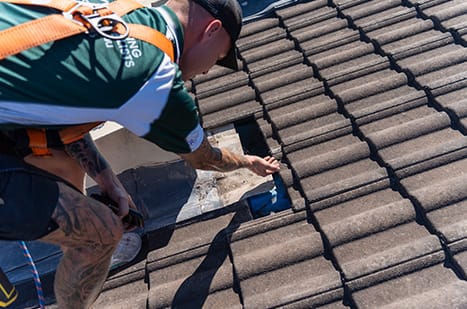
A proper commercial roofing leak inspection isn’t just someone walking the roof looking for obvious holes. It typically includes:
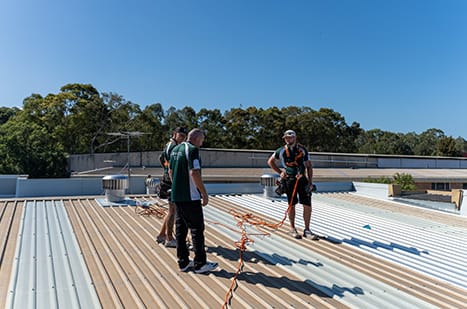
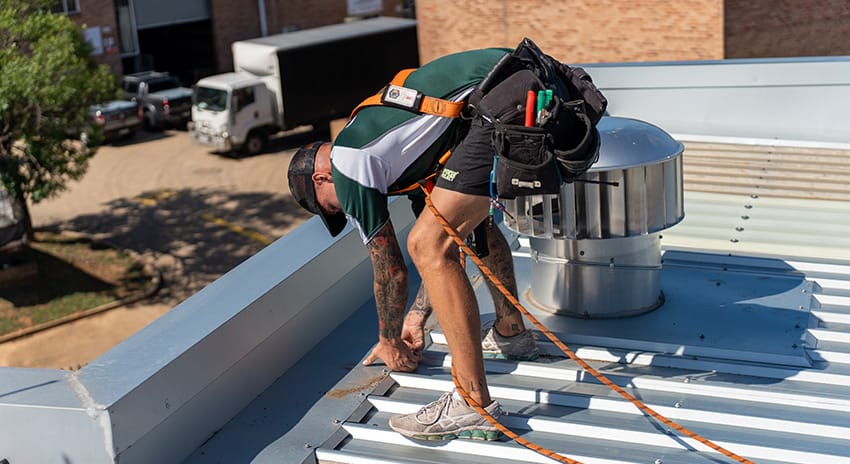
- A full roof walk in daylight, checking membrane condition, ponding areas, and flashing points around any penetrations like vents, AC units, or skylights.
- Drainage assessment, since blocked or undersized drainage is one of the most common causes of leaks on commercial flat roofs in Sydney, especially on older buildings that were never upgraded when rooftop plant equipment was added.
- Internal tracing, following the water path from the ceiling damage back through the roof structure rather than assuming the leak is directly above the stain.
- Moisture mapping, particularly on larger commercial roofs, to identify saturated insulation before it leads to structural timber or steel deck issues.
Why This Matters Beyond the Immediate Repair
Undetected leaks on commercial buildings don’t just damage ceiling tiles. They saturate insulation, which stops doing its job and can add to heating costs. They can corrode steel decking on industrial buildings. And if it’s a strata or multi-tenant building, an unresolved leak becomes a liability issue fast, especially if it affects a tenant’s fit out or stock.
For property managers, getting ahead of these issues through regular roof maintenance and repairs can help identify a failed seal or cracked flashing before it develops into more extensive water damage and a frustrated tenant.
FAQ
How much does commercial roof leak detection cost in Sydney? It varies depending on roof size, access, and how straightforward the source of the leak is to trace. A standard inspection for a mid-size commercial building is the best way to determine what’s involved before providing a quote.
How often should commercial roofs be inspected in Sydney? At minimum, twice a year, ideally before winter and again after storm season in spring, plus an additional check after any major weather event.
Can a leak be fixed without knowing exactly where it’s coming from? Not properly. Patching the visible damage without tracing the source usually just delays the problem and can mask a bigger issue underneath.
Does ponding water always mean a leak is coming? Not always, but persistent ponding accelerates membrane wear and is one of the most common precursors to a leak developing on flat commercial roofs.
What’s the difference between a leak repair and a roof restoration? A repair addresses a specific failure point. A restoration deals with the roof’s overall condition, which is worth considering if multiple leaks have started appearing across an older roof. You can view examples of Ivy Roofing’s roofing projects to see the different types of work involved.
Are older commercial buildings in Sydney more prone to roof leaks? Generally yes, particularly buildings built before rooftop plant and equipment became standard, since the roof was never designed around those extra penetrations.
Ivy Roofing is a Sydney-based roofing specialist. We work with homeowners, property managers, and strata across Sydney to keep roofs in top condition. Get in touch with us to see how we can help you.
Please note that any costs mentioned within this article are fictional, and a proper quote specific to your situation is required.