Almost every homeowner deals with a roof leak eventually. It’s one of those problems that feels sudden when it shows up-a stain on the ceiling, a drip during a storm- but it’s rarely actually sudden. There’s usually a cause that’s been quietly developing for a while, and understanding what that cause is tends to be the difference between a fix that actually works and one that just delays the problem.
The Most Common Causes of Roof Leaks in Sydney Homes
Cracked or displaced roof tiles. This is probably the single most common cause on Sydney’s tiled roofs, which make up a large share of housing stock across the city. Tiles can crack from age, from foot traffic during maintenance work, or occasionally from falling branches, and once a tile is compromised, water has a clear path underneath it.
Failed flashing. Flashing around chimneys, skylights, vent pipes, and where roof sections meet is designed to seal these transition points, but the sealant and material can degrade over time, particularly with prolonged sun exposure. Sydney gets a lot of direct UV exposure across the year, and older flashing sealants often don’t hold up as well as they did when first installed.
Blocked gutters and downpipes. When gutters can’t drain properly, water can back up and find its way under roof edges rather than running off as intended. This is especially common in established Sydney suburbs with mature trees, where leaf litter accumulates steadily through the year.
Ageing or damaged roof membranes. Homes with flat or low-pitch sections, common in some midcentury builds around Sydney, rely on membrane systems that have a defined lifespan. Once that membrane starts breaking down, it generally doesn’t take much rain to expose the issue.
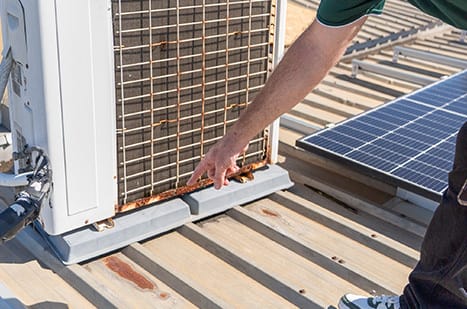
Poorly sealed roof penetrations. Any addition to a roof- a new vent, a solar panel mount, an antenna- creates a penetration point that needs to be properly sealed. If it wasn’t installed correctly, or if the seal has degraded over time, it becomes a likely source of leaks.
Valley deterioration. Roof valleys, where two roof planes meet, handle a lot of water flow and can wear out faster than the rest of the roof, particularly on older homes where valley material may not have been replaced in years.
Why Identifying the Actual Cause Matters
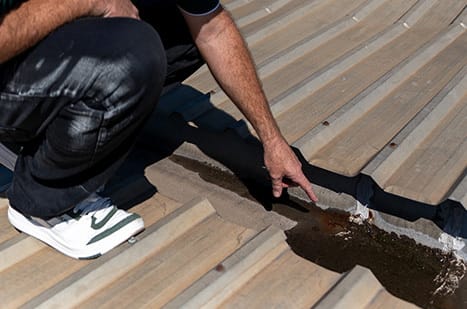
A leak repair that addresses the visible symptom without properly identifying the underlying cause tends to be a short-term fix at best. Water often travels along roof timber or sarking before it becomes visible inside a home, so the spot where a stain appears on the ceiling isn’t always directly below where the water is actually entering the roof.
This is why a proper inspection, rather than a quick patch job, generally leads to a more lasting result. Tracing the leak back to its actual source, whether that’s a cracked tile several rows away, a failed flashing seal near a chimney, or a blocked gutter causing water to back up, means the repair addresses the actual problem rather than just the symptom that happened to be visible.
How Leaks Are Typically Fixed
Depending on the cause, fixing a roof leak might involve replacing cracked or displaced tiles, resealing or replacing failed flashing, clearing and repairing gutters and downpipes, or in the case of degraded membrane sections, patching or replacing the affected area. For leaks caused by valley deterioration, this usually means replacing the valley material itself rather than attempting a surface-level patch.
In some situations, particularly on older roofs with several ageing issues appearing at once, a broader restoration might make more sense than a series of individual repairs, since addressing multiple related issues together tends to be more cost-effective and longer-lasting than treating each one separately as it comes up.
FAQ
Why does my roof leak in one spot but the cause seems to be somewhere else? Water often travels along roof timber or sarking before becoming visible, so the stain or drip location doesn’t always sit directly below the actual entry point.
How can I tell if a leak is from a tile issue or a flashing issue? This generally requires a proper inspection, since both can present with similar symptoms from inside the home, but they need quite different repair approaches.
Can a blocked gutter really cause a roof leak? Yes, when gutters can’t drain properly, water can back up under roof edges rather than flowing away as intended, which can lead to leaks that might not otherwise occur.
Is it possible to have more than one leak cause at the same time? It’s fairly common on older roofs, particularly if several areas are ageing at a similar rate, which is part of why a full inspection is more useful than checking only the obvious problem area.
Does fixing a roof leak always require professional help? For anything beyond simple gutter clearing, identifying and properly sealing the actual source generally requires a proper roof inspection to avoid missing the real cause.
Will a roof leak get worse if it’s left unaddressed? In many cases, yes, since ongoing water exposure can affect roof timber and insulation over time, though how quickly this happens depends on the specific cause and conditions.
Ivy Roofing is a Sydney-based roofing company specialising in high-quality roof repairs, restorations, and replacements. We work with homeowners across Sydney to properly identify and fix the real cause of roof leaks. Get in touch with us to arrange an inspection.