Most expensive roof repairs don’t start as expensive problems. They start as small ones that go unnoticed, or are noticed and left. A lifted flashing here, a cracked tile there, a section of gutter that’s been sagging for two years. By the time water is showing up on the ceiling, the minor problem has already become a significant one.
The good news is that most roof damage gives you warning signs well before it becomes a serious issue. You just have to know what you’re looking for. This guide covers the specific things to check on Sydney homes and commercial properties, what each sign means, and when you need to act rather than monitor.
Why Catching Roof Damage Early Changes the Cost Equation Completely
The cost difference between catching a roofing problem early and dealing with it once it’s caused internal damage is substantial. A cracked ridge cap that might cost somewhere in the range of $300 to $800 to repair when identified early can, if left until water has been getting into the roof cavity for a season or two, potentially involve repointing the entire ridge, replacing damaged sarking, and dealing with wet insulation. That same problem can then escalate into repairs ranging from several thousand dollars upwards, depending on the extent of the damage.
The same pattern applies across most roofing issues. Small problems that seem straightforward to repair in isolation often become much more expensive once water ingress affects surrounding materials or internal areas of the building.
So the economics of a regular visual check, whether you’re a homeowner who looks at their roof after a storm or a property manager with a formal inspection schedule, are clear. The time spent looking is worth far more than its cost if it catches something early.
As with all roofing work, repair costs can vary significantly depending on roof access, building height, roof pitch, roof type, and the extent of damage identified during inspection.
What to Check From the Ground
You don’t need to get on the roof to identify a lot of early-stage roof damage. A good pair of binoculars and a circuit of the building from ground level will tell you quite a bit.
Tile Roofs: What to Look For
For homes or buildings with concrete or terracotta tiles, ground-level inspection can identify:
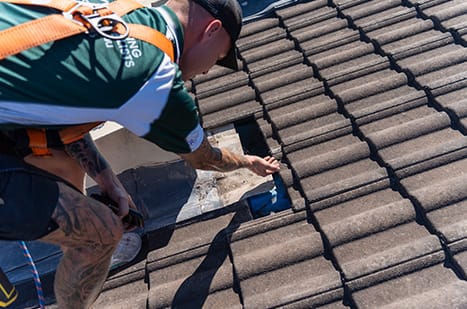
- Cracked, broken or missing tiles. Even one or two displaced tiles create an entry point for water. They’re usually visible as patches of dark or discoloured roof surface where a tile is clearly out of position or absent.
- Slipped or raised tiles where individual tiles have shifted out of plane with the surrounding roof. This tends to happen along valleys or at ridgelines where tiles are most exposed to wind.
- Lifted or crumbling ridge capping. The mortar bedding that holds ridge cappings in place deteriorates over time, particularly in Sydney’s temperature variations. Cappings that are cracked, hollow-sounding, or visibly lifting are an imminent leak risk.
- Moss, lichen or significant biological growth. A light coating of moss isn’t immediately dangerous, but heavy biological growth retains moisture and accelerates tile deterioration. It also indicates that water is sitting on the surface longer than it should.
- Dark patches or surface staining on tiles might indicate water is pooling or running in unexpected directions.
Metal Roofs: What to Look For
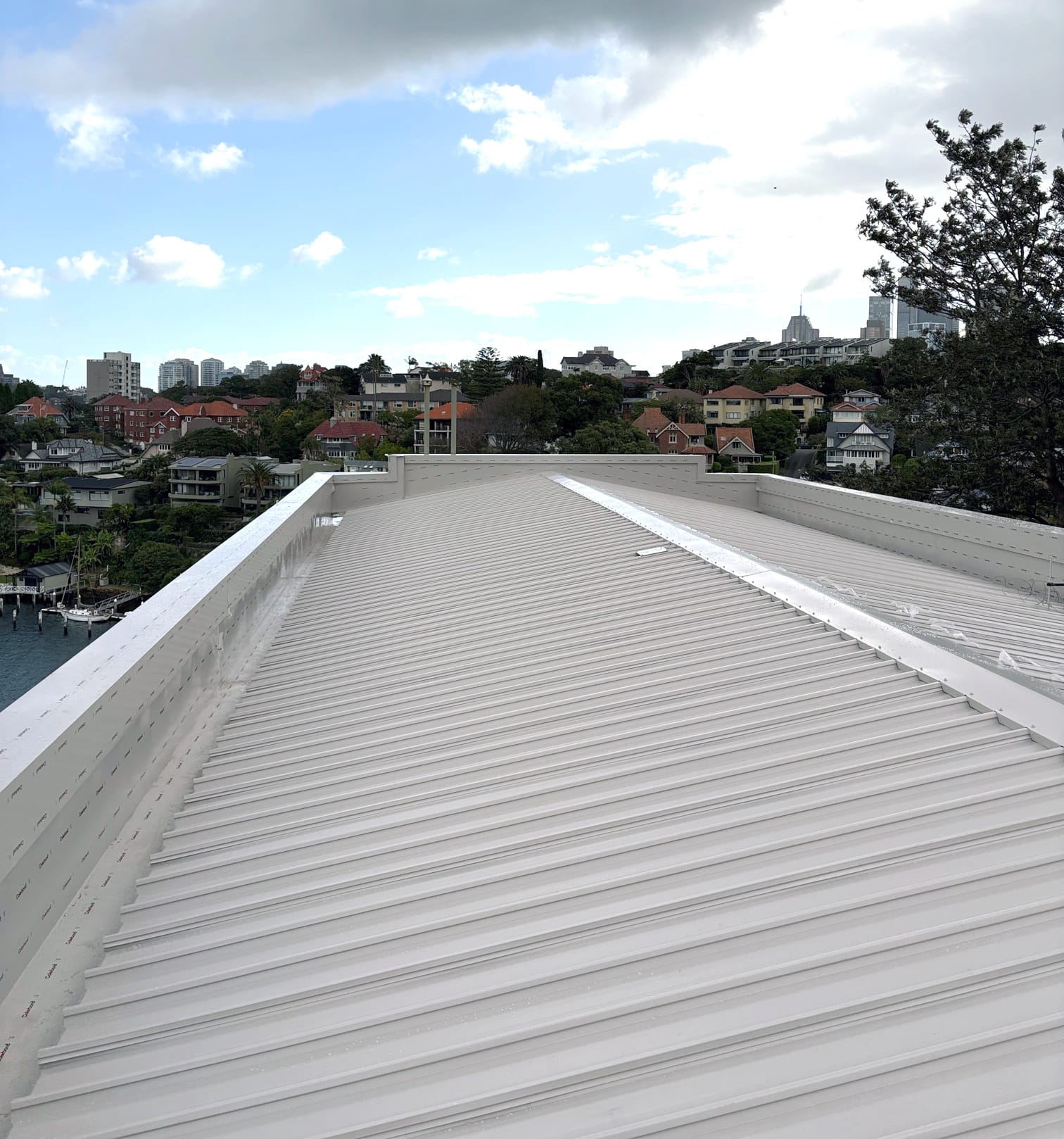
For Colorbond, corrugated iron, or other metal roofing systems, the key things to identify from ground level include:
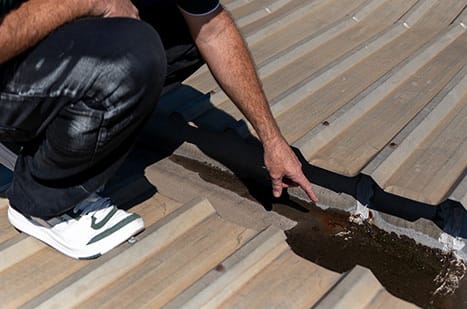
- Surface rust or discolouration. Small rust patches indicate that the protective coating has failed in that area. This is the early stage, and the appropriate response is treatment and recoating. Left alone, surface rust becomes through-rust and then a hole.
- Visible fastener corrosion. Rusted fastener heads visible from the ground indicate that protective washers have failed and moisture is entering at the fixing points. This is a common early failure mode on older metal roofs.
- Lifted or buckled sheeting. Metal roof sheets that are no longer lying flat can indicate that fixings have worked loose, thermal expansion has caused warping, or wind uplift has partially dislodged a section.
- Damaged or missing flashings at ridges, hips, valleys or penetrations. Flashings are the metal strips that seal junctions and transitions on a roof. If they’re visibly bent, corroded, or missing, that’s a water entry point.
Gutters and Downpipes: What to Look For
Gutters are often the first sign of roof problems, even when the roof surface itself looks intact. From the ground, check for:
- Gutters that are visibly sagging or pulling away from the fascia. This indicates that the gutter brackets have failed or the fascia board beneath is rotting. Water will overflow at low points rather than draining correctly.
- Overflowing gutters during or after rain, even when they appear clear from the outside. This often indicates a blockage lower in the system, particularly around downpipe connections.
- Staining on exterior walls below gutters, which suggests persistent overflow or leaking at gutter joints.
- Visible plant growth in gutters. If you can see vegetation growing from ground level, there’s a significant leaf and debris buildup that is almost certainly blocking drainage.
What to Check From Inside the Roof Space
If you have accessible roof space, whether via a roof hatch in a house or a maintenance access hatch in a commercial building, a visual inspection from inside provides a completely different and often more informative perspective.
Look for:
- Daylight is visible through the roof structure. Any point where you can see sky from inside the roof space is obviously a hole or gap that needs attention right away.
- Water staining on rafters, purlins, sarking or insulation batts. Old staining tells you there’s been moisture getting in. Fresh or damp staining tells you it’s active. Either warrants a follow-up.
- Wet or compressed insulation. Insulation that has absorbed moisture will feel damp and look darker than surrounding dry material. Significantly compressed insulation may indicate that a past leak has been drying out, but the source hasn’t been fixed.
- Sagging or stained sarking. The sarking membrane beneath tiles or metal sheeting can collect water and create a visible sag where moisture has pooled. It may also show staining at the edges where water has been running.
- Rust marks on structural metal from purlins or roof frames indicate condensation or water entry at those points.
Of course, internal roof space access comes with its own safety considerations. For commercial buildings, working at height in a confined space requires appropriate controls. For homes, walking on ceiling joists rather than ceiling plaster is obvious, but worth saying.
After a Storm: Specific Things to Check
Sydney’s storm season, roughly October through to March, produces events that can cause significant roof damage quickly. After any significant storm event, it’s worth doing a targeted check within 24 to 48 hours.
Things to look for specifically after storm events:
- Debris on the roof, including branches, leaf matter and hail residue. Heavy debris can block drainage and concentrate loads.
- Displaced or cracked skylight panels, particularly on polycarbonate or acrylic skylights that are more vulnerable to hail impact than glass.
- Lifted flashings, especially around penetrations and at parapet edges, where wind uplift is most effective.
- Shifted tiles or raised metal sheeting, that wasn’t previously apparent from the ground.
- Any new water staining inside the building, on ceilings or high on walls that wasn’t present before the storm.
A post-storm check doesn’t need to be a full professional inspection every time there’s rain. But after a storm significant enough to cause damage, catching any issues within 48 hours dramatically limits how much additional damage occurs in subsequent rain events.
Warning Signs Inside the Building
Internal signs of roof damage are a later-stage indicator, which is exactly why external checks matter. But if you’re seeing these inside, act right away:
- Water stains on ceilings or upper walls. Fresh staining is obviously urgent. Old yellow-brown staining is still worth investigating because it tells you a leak has happened before, and the source may not be resolved.
- Bubbling or peeling paint on ceilings or walls indicates moisture is present behind the surface.
- Damp smell in ceiling areas or upper floors without an obvious source. Roof space moisture often manifests as an earthy or musty odour before any visible sign appears.
- Rust staining on ceilings, which comes from corroding roof fixings or structural steel above, indicates sustained moisture at that point.
- Efflorescence on internal masonry walls is the white salt deposits that appear on brick or block walls when moisture is moving through them. Near the roofline, this often indicates water is entering at the parapet or wall junction.
When to Monitor vs When to Act
Not every sign you observe requires an emergency callout. Some warrant monitoring, some require scheduling a professional inspection, and some need action right away. Here’s how to triage:
Act immediately: Any active water ingress inside the building. Structural elements that appear visibly damaged or displaced. Gutters or sections of roof that are clearly dislodged or hanging loose. These are risks to the building and potentially to people below, and they don’t improve with time.
Schedule a professional inspection within the next few weeks: Cracked ridge capping or failed mortar bedding. Visible surface rust on metal roofing covering more than a small isolated area or multiple cracked or shifted tiles. Sagging gutters pulling away from the fascia. Old water staining inside that hasn’t been investigated.
Monitor at the next inspection: Isolated minor surface staining on tiles. Light biological growth without evidence of moisture damage. A small area of surface oxidation on metal roofing that hasn’t progressed to pitting. These are worth noting and watching, but don’t necessarily require urgent response.
The key principle here is: if you’re not sure, get a professional opinion. An inspection that confirms everything is fine costs you an hour of a roofer’s time. An inspection that catches a developing problem early saves you multiples of that in avoided repair costs.
Building a Simple Inspection Habit
You don’t need a formal program to catch most early-stage roof damage. What you need is a habit of looking. For homeowners, a ground-level circuit of the property after any significant storm, and a binocular check twice a year, will catch the majority of early warning signs. For property managers, building a basic visual check into your regular property visits creates a documented monitoring record that’s worth having.
The things to note when you’re doing an informal check: anything that’s changed since the last time you looked. A new rust patch. A tile that wasn’t cracked before. A section of gutter that’s now sagging. Change is the signal. If everything looks the same as last month, that’s generally good news.
And obviously, for anything beyond a visual check, get a qualified contractor up there. The investment in a professional inspection, with a written report and photos, is one of the better maintenance decisions you can make for any property.
Frequently Asked Questions
How often should I visually check my roof for damage?
For residential properties, twice a year plus after any significant storm is a reasonable routine. Spring and autumn are good times because they bookend the seasons that create the most stress on roofing materials. For commercial properties, the same principle applies, supplemented by a professional inspection program on the same schedule.
Can I inspect my own roof, or do I need a professional?
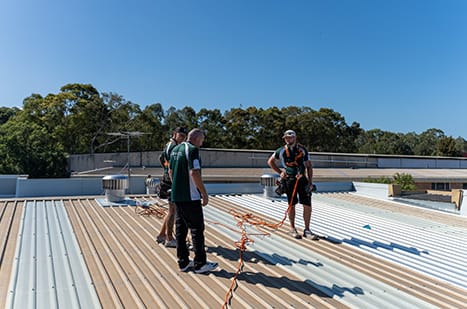
Ground-level and internal roof space checks are something any careful homeowner or property manager can do. Getting on the actual roof surface is a different matter. Falls from height are a leading cause of serious injury and death in Australia, and residential roofs are no exception. If you need to get above gutter height, use a qualified contractor with appropriate safety equipment. The cost of a professional visit is trivial compared to the risk of an injury.
What does a cracked ridge cap actually mean for my roof?
The ridge capping covers the apex of a pitched roof and seals the junction between the two roof planes. When the mortar bedding cracks, it allows water to enter the roof cavity at the highest point. From there, it can travel along the sarking and rafters, making the source difficult to trace by the time it shows up internally. Cracked or loose ridge capping should be attended to promptly, particularly before the wet season.
Is surface rust on a metal roof serious?
In its early stages, surface rust is manageable. It indicates the protective coating has failed in that area, but the underlying steel hasn’t been compromised yet. The appropriate response is treating and recoating the affected area before the rust progresses to pitting and eventually through the sheet. Left unattended, surface rust expands and eventually creates holes that require full sheet replacement, which is substantially more expensive.
I’ve found old water staining on my ceiling, but there’s no active leak. Do I need to do anything?
Yes, it warrants investigation. Old staining suggests a water entry point at some stage. It may be that the source was repaired, or it may be that conditions haven’t been wet enough recently to trigger it again. Either way, having a contractor identify the likely source and confirm whether it’s been properly addressed gives you peace of mind and an early warning if the issue recurs.
How do I know if roof damage is covered by my home insurance?
Coverage depends on whether the damage was caused by a sudden event, such as a storm or gradual deterioration. Storm damage to a well-maintained roof is generally covered. Damage resulting from a roof that was already in a state of disrepair before the weather event is often excluded under the maintenance clause. Keeping your roof in good condition and having professional inspection records is the most straightforward way to protect your claim position.
Ivy Roofing offers professional roof inspections for residential and commercial properties across Sydney. If you’ve spotted something that looks off, or you want a proper condition assessment before problems develop, call us on 02 9674 4556 or visit Ivy roofing to book an inspection.
Please note that any costs mentioned within this article are fictional, and a proper quote specific to your situation is required.