There’s usually a stretch in September and October when Sydney’s weather starts turning; the mornings are still cool, but the afternoons build up that heavy, humid pressure that tends to break into a storm by late in the day. If you’ve run a business in Sydney for more than a season or two, you know exactly the kind of weather this is talking about.
Spring storms in Sydney can be sudden and intense, often bringing strong winds and heavy, fast-moving rain in a way that’s quite different to the steady grind of winter rain. For commercial roofs, that difference matters, because a roof that’s coped fine with months of gentle winter rain can still be caught out by the sudden intensity of a spring storm, particularly if there are existing weaknesses that just haven’t been tested that hard yet.
Why Spring Storms Are Different to Winter Rain
Winter rain in Sydney tends to be prolonged but relatively gentle, the kind of weather that slowly finds small gaps over days. Spring storms are a different animal entirely. They often bring sudden downpours, gusty winds, and sometimes hail, all within a short window. This kind of weather tests a roof’s drainage capacity in a way that slow winter rain doesn’t, because a huge volume of water needs to move off the roof quickly rather than gradually.
It also puts more pressure on flashing, roof fixings, and any loose or ageing sections of roofing material, since strong wind gusts can lift or shift components that have been sitting quietly in place for years without ever being properly tested.
What to Check Before Storm Season Hits
Drainage capacity. Gutters, downpipes, and roof drains need to be completely clear before storm season, since a sudden heavy downpour will overwhelm a system that’s already partially blocked far faster than steady winter rain would.
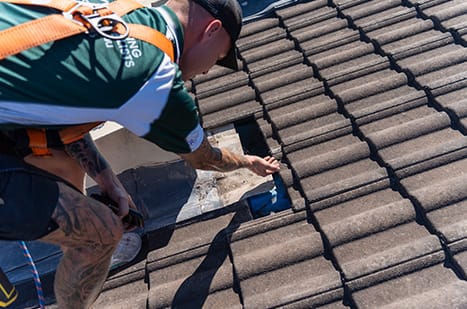
Loose or ageing roofing material. Any tiles, sheeting, or flashing that’s already showing signs of wear should be addressed beforehand, since strong wind gusts during a storm are far more likely to dislodge something that wasn’t properly secured in the first place.
Rooftop equipment mounts. AC units, solar panels, and other rooftop fixtures should be checked to confirm their mounts and surrounding seals are secure, since these are common points of failure during high wind events.
Overhanging trees. Branches near the roofline can cause damage during strong winds, and clearing anything that’s grown too close over the warmer months is a straightforward preventative step.
Why This Matters More for Commercial Properties
A residential roof issue during a storm is stressful enough. A commercial roof issue can mean stock damage, equipment damage, business interruption, and in some cases safety concerns for staff or customers if water ingress affects electrical systems. Insurance claims relating to storm damage often come down to whether reasonable maintenance had been carried out beforehand, so a documented pre-storm inspection can matter beyond just preventing the damage itself.
What Happens If Storm Damage Does Occur
Even with good preparation, Sydney storms can occasionally cause damage that couldn’t reasonably have been prevented, particularly with hail or unusually severe wind events. If that happens, getting a proper assessment done quickly matters, both to prevent secondary damage like water ingress continuing to spread, and to have clear documentation for any insurance claim.
FAQ
When does storm season typically start in Sydney? Spring storms generally start becoming more frequent from September through into summer, though the exact timing and intensity vary from year to year.
How much notice is there before a spring storm hits Sydney? This varies quite a bit, and severe storms can develop with relatively short notice, which is part of why preparing roofs beforehand matters more than reacting once a storm is already forecast.
Can storm damage always be prevented with maintenance? Not entirely. Good maintenance reduces the risk of damage significantly, but severe hail or extreme wind events can still cause damage even to a well-maintained roof.
Does business insurance typically cover storm damage to commercial roofs? This depends on the specific policy, and insurers often look at whether reasonable maintenance had been carried out, so it’s worth checking your coverage and keeping maintenance records.
How quickly should storm damage be assessed after it occurs? As soon as reasonably possible, since delays can allow secondary issues like water damage or mould to develop further.
Is it worth getting a roof inspection specifically before storm season? Yes, a pre-storm inspection focused on drainage, loose material, and rooftop fixtures can catch issues that might otherwise turn into significant damage during a severe weather event.
Ivy Roofing is a Sydney-based roofing company specialising in high-quality roof repairs, restorations, and replacements. We work with businesses across Sydney to prepare commercial roofs ahead of storm season. Get in touch with us to arrange a pre-storm roof assessment.