Most roof problems don’t announce themselves. There’s no single dramatic moment where everything suddenly goes wrong. Instead, there’s usually a slow build-up of small signs that get missed or explained away, right up until something forces the issue, often during a storm when it’s the least convenient time to deal with it.
If you own a home in Sydney, understanding the early signs of a roof heading toward failure can save you from that scenario altogether, and often save a fair bit of money in the process, since catching an issue early is generally far more affordable than dealing with the aftermath.
Why These Signs Get Missed
A lot of the early indicators that a roof is struggling simply aren’t visible from ground level, or they’re subtle enough that they get written off as minor and unrelated. A slightly discoloured patch of ceiling gets painted over rather than investigated. A few loose tiles get noticed and then forgotten. None of these things feels urgent on their own, which is exactly why they tend to build up into a bigger problem.
Common Signs a Roof Is Heading Toward Failure
Ceiling stains that keep reappearing. A stain that gets painted over and then shows up again isn’t fixing itself. It usually means the underlying source of moisture is still active, even if it’s not obvious where it’s coming from.
Sagging areas on the roofline. Viewed from the street or from a neighbouring property, a roof that has visible dips or sagging sections, rather than a straight, even line, can indicate structural timber issues underneath that have been developing for some time.
Granules building up in gutters. For roofs with certain types of coated materials, finding a buildup of granules in the gutters can be a sign the roofing surface is starting to break down, particularly on older roofs that are approaching the end of their expected lifespan.
Daylight visible through the roof from inside. This one is fairly unambiguous, and if it’s visible from inside the roof space, it usually means there’s a gap significant enough to let water through as well during rain.
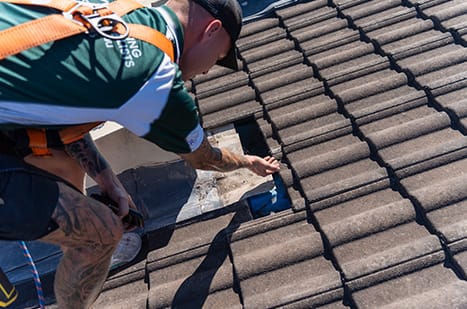
Cracked, curling, or missing tiles. A single cracked tile isn’t necessarily an emergency, but multiple tiles showing similar wear across different areas of the roof often points to broader ageing across the whole roofing system rather than an isolated issue.
Musty smells or visible mould in ceiling cavities. This can indicate ongoing moisture exposure that hasn’t been properly addressed, and it’s worth investigating rather than just treating the mould itself, since the underlying moisture source needs to be found.
Rising energy bills without an obvious explanation. This one surprises a lot of homeowners, but a roof that’s no longer providing proper insulation, whether due to damaged material or compromised sarking, can affect how well a home retains heating or cooling.
Why Sydney’s Weather Makes Early Detection Particularly Useful
Sydney’s climate moves through fairly distinct phases across the year: humid, stormy summers, drier and often windy spring conditions, and long stretches of steady rain through winter. A roof with an existing weakness tends to get tested differently by each of these conditions, so an issue that wasn’t obvious during a dry, still period might suddenly become apparent once sustained winter rain sets in. This is part of why signs that seem minor at one time of year can escalate once the weather changes.
What to Do If You Notice Any of These Signs
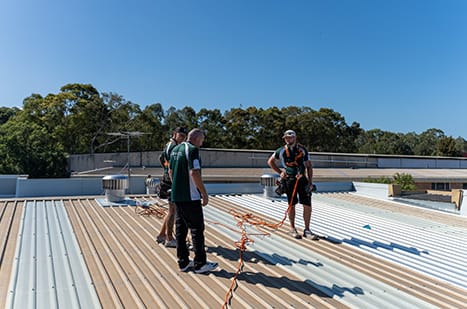
The most useful first step is a proper roof inspection rather than trying to diagnose the issue yourself from the ground or through a quick look in the roof cavity. An inspection can identify whether an issue is isolated and easily addressed, or whether it points to something more widespread that’s worth understanding fully before deciding on repairs.
It’s also worth remembering that not every one of these signs means a roof is in serious trouble. Some can be relatively minor and easily fixed. The value in knowing what to look for isn’t to cause alarm; it’s to catch things early enough that a straightforward repair remains the most likely outcome, rather than letting a small issue develop into something more significant over time.
FAQ
How urgent is it if I notice a recurring ceiling stain? It’s worth getting looked at reasonably soon, since a recurring stain generally means the moisture source hasn’t actually been resolved, even if it doesn’t seem urgent day-to-day.
Can a sagging roofline always be seen from the ground? Not always, particularly on lower-pitch roofs or from certain angles, which is part of why a proper inspection can pick up on issues that aren’t obvious from a casual glance.
Is it normal for older roofs to have a few cracked tiles? Occasional wear is common on ageing roofs, but multiple cracked tiles across different areas can suggest broader deterioration worth having assessed.
Does a musty smell in the roof cavity always mean there’s a leak? Not necessarily, since poor ventilation can also contribute to this, though it’s still worth investigating to rule out an active moisture issue.
How often should I check my own roof for these signs? A visual check from the ground every few months is a reasonable habit, alongside a proper professional inspection at least once or twice a year.
Will catching these signs early always mean a cheaper repair? Generally yes, since smaller, isolated issues tend to cost less to fix than problems that have had time to spread or cause secondary damage, though this can vary depending on the specific situation.
Ivy Roofing is a Sydney-based roofing company specialising in high-quality roof repairs, restorations, and replacements. We work with homeowners across Sydney to catch roofing issues early and fix them properly.Get in touch with us to arrange a roof inspection.