Most property owners and managers assume that if their building insurance is paid up and current, a roof-related claim will be straightforward. Then the assessor arrives, walks the roof, and the conversation changes.
Insurance claims related to roofing are among the most commonly disputed in commercial and residential property insurance in NSW. The reason isn’t usually the event itself, the storm, the leak, the damage. It’s what was already happening before the event that insurers focus on.
This article explains how roof maintenance history directly affects your ability to make a successful claim, and what you can do to protect your position.
How Insurers Assess Roof-Related Claims
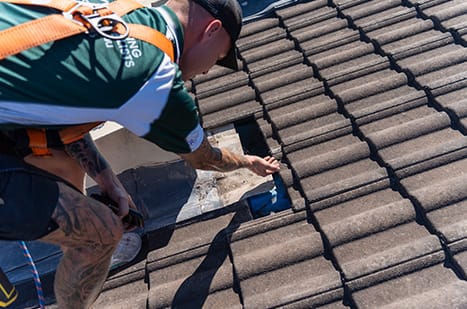
When a roofing claim is lodged in NSW, insurers typically send a licensed assessor or loss adjuster to inspect the property. They’re not just documenting what happened. They’re determining the cause and looking at whether the damage was sudden and accidental or the result of gradual deterioration.
That distinction matters. A standard commercial or home building policy will cover sudden and unforeseen events, a storm that strips cladding, hail that shatters skylight panels, wind that lifts a flashing. But the same policy will typically exclude damage caused by gradual deterioration, lack of maintenance, or a pre-existing condition that was known or reasonably should have been known.
The assessor will look at:
- The age and general condition of the roof relative to its expected serviceable life.
- Evidence of pre-existing corrosion, cracking or deterioration that predates the event being claimed.
- Whether there was a documented maintenance program, including inspection records and repair history.
- Whether any previous issues were reported to the insurer or addressed by a qualified contractor.
- The proximity in time between the damage found and the claimed event.
If the assessor concludes that the damage was contributed to or caused by poor maintenance, the insurer may deny the claim, reduce the settlement, or apply a betterment deduction, effectively charging you for the improvement your old, poorly maintained roof is receiving through the repair.
The Maintenance Exclusion: What It Actually Means
Almost every building insurance policy issued in NSW includes a maintenance exclusion clause. The exact wording varies, but the principle is consistent: the insurer is covering you against unexpected events, not against the consequences of failing to look after your property.
In practical terms, this means if an assessor can establish that your roof was already in a state of deterioration before the storm hit, and that deterioration contributed to the damage or the extent of it, the claim is at risk. A roof with widespread corrosion that was already leaking before a weather event is a very different claim to a well-maintained roof that sustained storm damage.
This is not a minor technicality. Insurers in Australia have become increasingly rigorous in applying maintenance exclusions following a period of high weather-related claims. Getting a claim partially or entirely denied because of maintenance issues is genuinely common, and it’s almost entirely preventable.
What ‘Deferred Maintenance’ Looks Like to an Assessor
Property managers sometimes underestimate how much a trained assessor can read from a roof in a short inspection. Signs that will raise flags include:
- Widespread surface oxidation or rust patches on metal roofing that show the protective coating failed some time ago.
- Degraded or missing sealant around flashings, penetrations and skylights that is obviously not recent damage.
- Blocked or heavily corroded gutters showing evidence of long-term neglect rather than storm debris.
- Ponding areas with biological growth, algae, moss and lichen growth patterns indicate sustained moisture and drainage failure over time.
- Previous repair attempts that are themselves deteriorating, patched areas with cracked or peeling sealant, suggest ongoing neglect.
- Skylight panels that are discoloured, crazed or brittle from UV degradation that occurs over years, not days.
None of these is difficult to identify. And each one tells the assessor a story about how the property has been managed. You get the point. A roof that looks genuinely maintained and a roof that was patched occasionally and otherwise ignored look completely different on inspection.
How Maintenance Records Protect Your Claim
Documented maintenance history is one of the strongest protections you have in a disputed insurance claim. If an assessor finds corrosion on your flashings but you have records showing they were inspected six months ago, assessed as serviceable, and that repairs were completed to the areas identified as at-risk, your position is fundamentally different to someone who has no records at all.
What constitutes good documentation for insurance purposes:
- Professional inspection reports from a licensed roofing contractor, dated and signed, with photographic evidence of condition at the time.
- Written repair quotes and invoices showing when work was ordered, who completed it, and what was done.
- Contractor recommendations that were actioned if a repair was identified and completed before failure demonstrate reasonable upkeep.
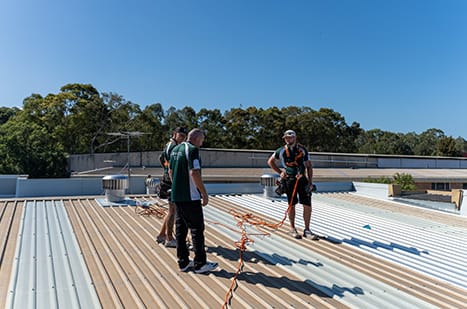
- A consistent inspection schedule: two professional inspections per year is generally considered reasonable for commercial properties; annually for residential.
- Notes on any issues reported by building occupants and how they were followed up.
These records don’t need to show a perfect roof. They need to show a responsibly managed one. An insurer assessing a claim against a property with a thorough maintenance file has far less room to argue gradual deterioration than one assessing an unmaintained property.
If you’re unsure where to start, working with a contractor that provides structured reporting and maintenance programs makes this process far easier to manage and document properly.
NSW-Specific Considerations for Strata and Commercial Buildings
For strata schemes in NSW, roof maintenance obligations sit with the owners’ corporation under the Strata Schemes Management Act 2015. The Act requires the owners’ corporation to maintain and repair common property, which includes the roof. Failure to do so can create liability exposure beyond the insurance question; it can create personal liability for committee members if damage occurs because of known maintenance failures.
Under the Act, strata buildings are also required to have a 10-year capital works fund plan that accounts for major maintenance and replacement items, including the roof. This plan should reflect realistic estimates for roof maintenance and, where the roof is approaching the end of life, provision for replacement. An underfunded plan that has deferred roof maintenance over multiple years creates problems both with insurers and, potentially, with the Fair Trading NSW if a dispute arises.
For commercial property owners, keep in mind that the Insurance Contracts Act 1984 (Cth) places a duty of disclosure on insured parties at the time of policy renewal. If you are aware of existing roof deficiencies and don’t disclose them, coverage may be voided entirely, not just reduced.
What To Do Before Making a Roof-Related Claim
If you’re in a position where you need to make a claim and you’re concerned about your maintenance history, here’s how to approach it:
Get a professional inspection done before lodging if time allows. An independent assessment from a licensed roofing contractor that documents the storm damage clearly and separately identifies any pre-existing conditions that are unrelated to the claim event gives you a much stronger position.
Gather your maintenance records. Pull together every inspection report, quote, invoice and correspondence relating to the roof going back as far as you have. Even imperfect records are better than none.
Be specific about the event in your claim notification. Date, time, nature of the weather event, what damage was observed and when. Vague claims are harder to manage.
Don’t do emergency repairs before the assessor inspects, or at least photograph everything comprehensively beforehand. An assessor who can’t see the original damage has less to work with.
Engage a specialist if the claim is complex. Public loss adjusters and insurance claims consultants can advocate on your behalf. For large commercial claims, this is often worth the cost.
If you need an independent inspection or report before lodging a claim, you can arrange this by getting in touch with our team.
How to Protect Yourself Going Forward
The easiest time to protect your insurance position is before anything goes wrong. So, if you’re reading this after a claim has resolved and you want to make sure you’re better prepared next time, here’s what matters:
- Schedule professional roof inspections at least twice a year for commercial properties, at least annually for residential. Get written reports with photos.
- Action recommended repairs promptly and keep the invoices. A repair that’s recommended but never done is documented evidence of deferred maintenance.
- Notify your insurer proactively if there’s a significant roof deficiency you’re aware of. It may affect your premium, but it’s better than having coverage denied at claim time.
- Keep a maintenance file for each property with all roof-related documents in one place, easily accessible when needed.
- For strata schemes, ensure the capital works plan adequately funds the roof, and review it whenever a major inspection identifies new issues.
For property owners and managers looking to put a structured plan in place, we offer a range of roofing and maintenance services across Sydney.
Frequently Asked Questions
Will my insurer automatically deny a claim if I have no maintenance records?
Not automatically, but the absence of records makes it much easier for them to apply the maintenance exclusion. Without documentation showing the roof was in reasonable condition before the event, the assessor has more latitude to attribute the damage to gradual deterioration.
What if the storm damage is clearly recent, not from pre-existing deterioration?
If the cause is clearly storm-related and the damage is obviously fresh, you have a stronger claim even without perfect maintenance records. But ‘obviously fresh’ is a judgement call made by the assessor. A well-maintained roof with clean documentation leaves far less room for dispute than an aged roof with no records, even if the damage looks recent.
Can an insurer apply a betterment deduction to my repair?
Yes. Betterment deductions are applied when repairing or replacing a damaged item results in the owner receiving something better than what they had. If your 25-year-old corrugated iron roof is replaced with a new Colorbond, an insurer may argue you’re being bettered and reduce the settlement accordingly.
Does regular maintenance really change the outcome for small residential claims?
For significant claims, it definitely does. For small claims, the economics of a full dispute process usually don’t justify the insurer’s contesting. But if you’re dealing with a large residential claim, say a full re-roof after a storm, the insurer’s financial incentive to scrutinise the maintenance history is much higher.
Is it worth engaging a public loss adjuster for a disputed roofing claim?
For claims over $20,000 to $30,000, often yes. Public adjusters work for the insured (you), not the insurer, and understand how to document and present claims effectively. Their fee is typically a percentage of the settlement, so they’re incentivised to maximise it.
How often should a commercial property roof be professionally inspected to satisfy insurer requirements?
There’s no universal standard, but twice a year is the general recommendation for commercial properties. Some insurers and policies specify inspection requirements directly, so check your policy wording. The key is consistency and documentation, not just the frequency.
Ivy Roofing provides professional roof inspection and maintenance programs for commercial and residential properties across Sydney. Our inspection reports are designed to meet documentation requirements for insurance purposes and support stronger claim outcomes. Call us on 02 9674 4556 or visit ivyroofing.com.au to arrange an inspection.