The quote comes back and it’s split into two options. Option A: repair the damaged sections. Option B: replace the whole roof. The price difference is significant. And now you’re standing in your kitchen trying to work out which one is actually the right call.
This is genuinely one of the questions we get asked most often. And the honest answer is: it depends. Not helpful, obviously, but it’s true. The right choice between repairing and replacing a roof isn’t about picking the cheaper option or the more comprehensive one. It’s about understanding what your specific roof actually needs and making a decision that doesn’t cost you more in the long run.
This article breaks down how to think about it properly.
The Core Question: Is the Roof Worth Saving?
Before getting into costs and options, start with an honest assessment of your roof’s overall condition. A roof that’s had a localised problem, say a failed flashing around a skylight or a handful of cracked tiles, is a very different situation to a roof with widespread corrosion, multiple leak points, and coating that’s past its effective life.
The relevant factors to consider:
- Age of the roof relative to the expected lifespan of the material. Terracotta tiles can last 50+ years with reasonable maintenance. Concrete tiles, Colorbond and corrugated iron typically have a serviceable life of 25 to 40 years depending on condition and environment. If your roof is approaching or past that range, the economics of repair shift.
- Extent and pattern of damage. A single leak after a storm is a repair job. Multiple leak points across different sections of the roof suggest systemic failure rather than isolated damage.
- What’s causing the problems. Surface damage from a weather event is different to underlying structural deterioration or widespread material failure.
- What the next 10 years look like. If you’re planning to sell in two years, the calculation is different to if you’re in the house for the long term.
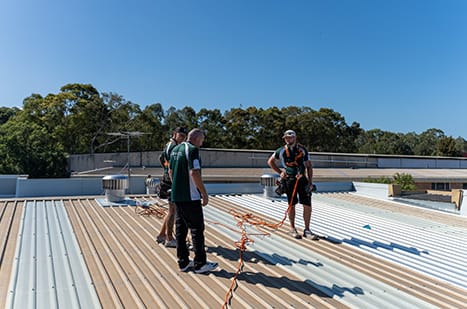
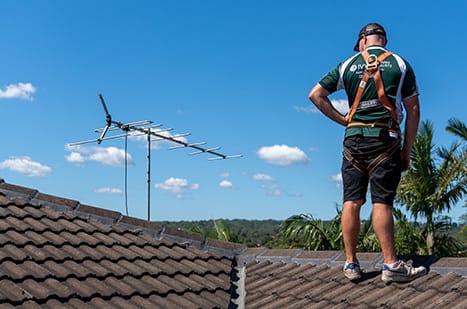
A thorough inspection by a qualified roofing contractor is genuinely the starting point here, not a quote call, but an actual diagnostic inspection that gives you a clear picture of the whole roof, not just the obvious problem area. If you’re looking to get that level of assessment, you can arrange an inspection with our team!
When Roof Repairs Are the Right Answer
Repairs make sense when the damage is genuinely isolated and the rest of the roof is structurally sound and not approaching end of life. Also, repairs are appropriate when the underlying material is still in good condition with localised failures that can be properly fixed without compromising the surrounding area.
Common repair scenarios that make sense for Sydney homes:
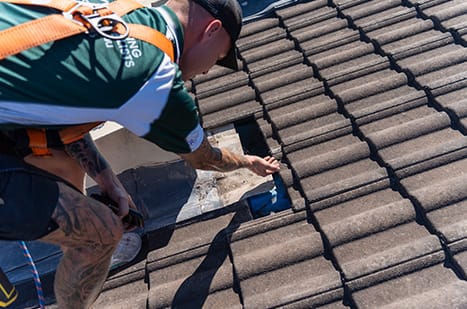
- Isolated tile breakage or slippage where individual tiles have cracked or shifted but the battens and underlays beneath are intact.
- Flashing failures around chimneys, skylights or penetrations where the seal has deteriorated but the surrounding roof is in good shape.
- Valley repairs where the valley lining has failed but the rest of the roof is functioning normally.
- Box gutter repairs or relining particularly common in older Sydney homes where the original box gutter liner has corroded or separated.
- Small sections of corrugated iron that have rusted through provided the damage is genuinely localised and not indicative of a wider corrosion pattern.
The thing to be careful about with repairs is false economy. If a contractor quotes to repair one leak point on a 30-year-old Colorbond roof without mentioning that there are four other sections showing the same level of deterioration, you’re paying for a repair that buys you six months, not six years.
Any good repair recommendation should include an honest assessment of the rest of the roof, not just the area you called about.
When Roof Replacement Is the Better Decision
Replacement becomes the right call when the cost and disruption of ongoing repairs is approaching or exceeding what replacement would cost over the same period. Also when the roof material has genuinely reached the end of its serviceable life, or when there are structural problems that can’t be addressed by surface repairs alone.
Signs that replacement is likely the better long-term decision:
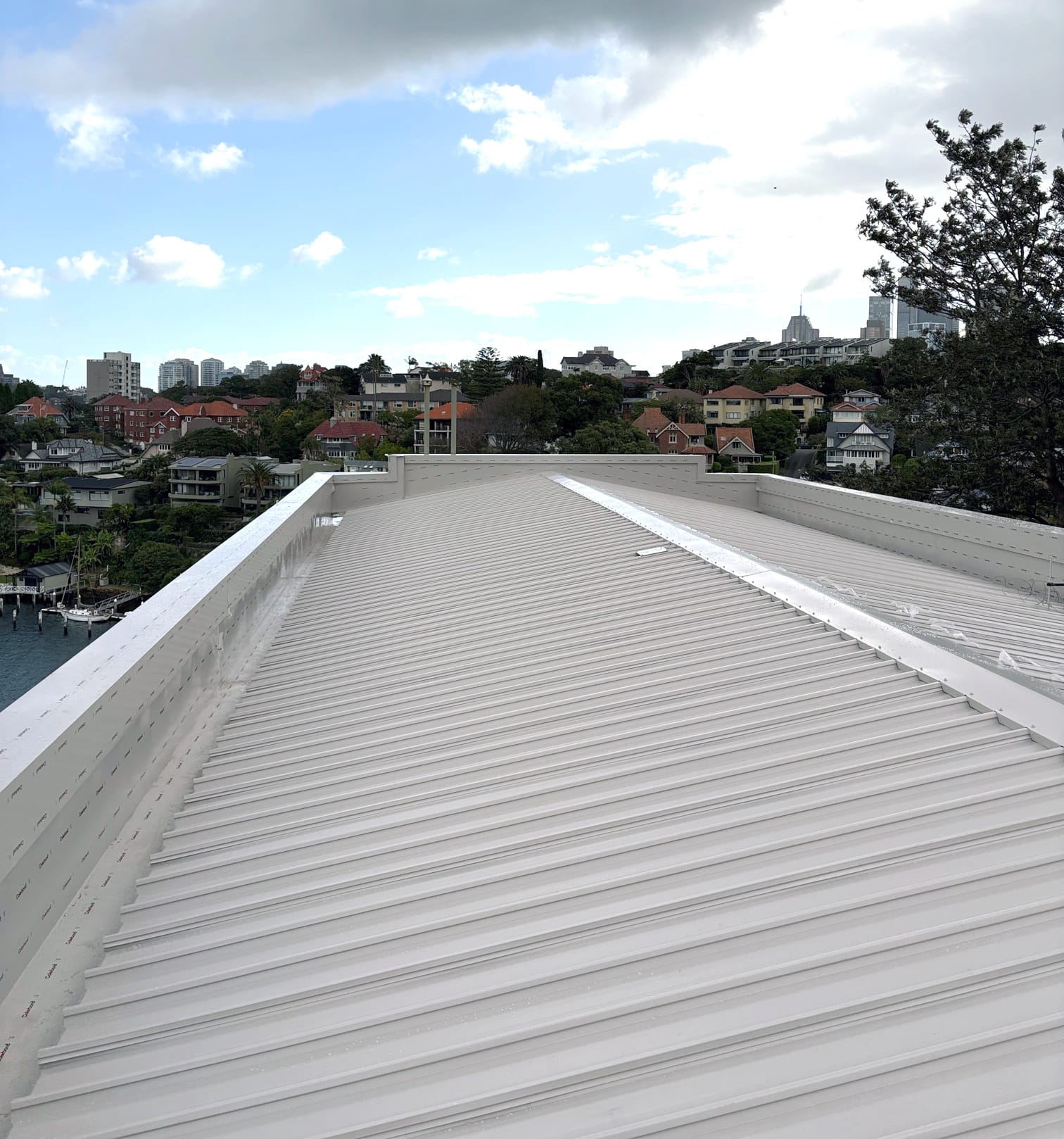
- Widespread corrosion on metal roofing that covers significant portions of the surface rather than isolated areas. Surface rust on a metal roof indicates that the protective coating has failed, and once it starts it spreads.
- Multiple leak points across different sections suggesting that the waterproofing system as a whole has failed rather than individual components.
- Concrete tiles that are heavily crazed, spalling or absorbing water, particularly if the sarking and underlays beneath are also deteriorated. Tile restoration may be appropriate in some cases, but not all.
- Major storm damage covering significant roof area where replacement is both more cost-effective and results in a complete and warrantied system rather than a patchwork repair.
- Discovery of significant structural issues during inspection, such as rotted or damaged battens, sarking that’s completely degraded, or rafters showing signs of movement.
Not every roof needs a full replacement. In some cases, a proper restoration will do the job and save you thousands. That’s a genuine option for tile roofs particularly, and worth understanding as a middle ground between repair and full replacement.
Roof Restoration: The Middle Ground Worth Understanding
For tile roofs that are in reasonable structural condition but showing surface weathering, blocked valleys, mortar failure at ridges and hips, and general decline in appearance, a full roof restoration is often the right choice rather than full replacement.
A proper restoration involves:
- High-pressure cleaning to remove biological growth, dirt and loose material from tiles and pointing.
- Re-bedding and repointing of ridge and hip cappings using flexible polymer pointing compound that won’t crack like old sand/cement mortar.
- Replacement of any cracked or broken tiles.
- Inspection and repair of flashings and valley materials.
- Application of a quality tile sealer or membrane coating to restore waterproofing and extend the serviceable life of the tiles.
A well-executed restoration on a tile roof in reasonable structural condition can add 10 to 15 years of serviceable life. The cost is significantly less than full replacement. The catch is that restoration only makes sense when the underlying roof structure and tile substrate are genuinely sound. Putting a new coating over tiles that are structurally compromised is a cosmetic fix, not a real solution.
This is where the diagnostic inspection matters again. A restoration recommendation should come after the contractor has confirmed the roof structure is appropriate for it.
Choosing a Roofing Contractor for Repairs or Replacement
The quality of whoever does the work matters as much as the decision itself. A bad repair can be worse than no repair, particularly if it traps moisture or damages surrounding materials. And a cheap replacement using substandard materials or poor installation is going to cause problems well before it should.
For any significant roofing work in NSW, make sure the contractor:
- Holds a current NSW contractor licence for the relevant category of roof work. You can verify this on the NSW Fair Trading licence check.
- Provides a detailed written scope of work before commencing, specifying what’s being done and what materials are being used.
- Carries appropriate public liability insurance and, for larger jobs, workers’ compensation for any employees on site.
- Provides a written warranty on workmanship, separate from any product warranty on materials.
- Can provide references or examples of comparable previous work.
Be cautious of any contractor pushing hard for full replacement when the problem seems localised, or conversely, one recommending a cheap repair on a roof that clearly needs more. The right contractor should be comfortable walking you through the honest trade-offs.
Making the Final Call
So, repairs or replacement? Use this as a guide:
Repairs are likely right if: the roof is under 20 years old, the damage is isolated and clearly defined, the rest of the roof is in sound condition, and the repair resolves the actual cause of the problem rather than just its symptoms.
Restoration is worth considering if: you have a tile roof that’s structurally sound but showing general surface decline, mortar failure or weathering, and you want to extend its life without the cost of full replacement.
Replacement is probably the better call if: the roof is approaching end of expected life, there are multiple problem areas, the extent of deterioration means repairs are likely to be ongoing, or a qualified inspection reveals structural issues that surface repairs won’t address.
In all cases, start with a proper inspection. A decision made on a proper diagnostic assessment, not just the obvious leak you called about, is a decision you can be confident in.
Frequently Asked Questions
How do I know if my roof needs repair or full replacement?
The most reliable way is a professional inspection from a licensed roofing contractor, where they assess the whole roof rather than just the problem area. Factors that point toward replacement include widespread material deterioration, multiple leak points, structural issues, or a roof age that’s approaching end of serviceable life for the material type.
Is roof restoration worth it for Sydney homes?
For tile roofs in reasonable structural condition, yes. A proper restoration can add 10 to 15 years of serviceable life at a fraction of replacement cost. The key is making sure the underlying structure is sound. Restoration applied over a compromised substrate is short-term, not a long-term solution. Also remember, you get what you pay for.
How long does a new roof last in Sydney’s climate?
It depends on the material. Colorbond and quality metal roofing typically has a serviceable life of 25 to 40 years in Sydney conditions, longer with proper maintenance. Terracotta tiles can last 50 years or more. Concrete tiles are generally in the 20 to 40 year range. Coastal locations with salt air exposure tend to see shorter lifespans for metal components.
Can I just repair a section of my roof rather than replacing the whole thing?
Often yes, but it depends on whether the rest of the roof is in sound condition. Replacing a section with new materials while leaving the remaining area in poor condition can create problems where the new and old materials meet, and the remaining aged sections will continue to deteriorate. Get a full roof inspection before deciding on a sectional repair approach.
What questions should I ask a roofing contractor before accepting a quote?
Ask whether they hold a current NSW contractor licence, what exactly the quote includes (materials specified, scope of work), what warranty they provide on workmanship, whether they carry public liability and workers’ compensation insurance, and whether the scope addresses the underlying cause of the problem or just the symptoms.
How much does a full roof replacement cost in Sydney in 2026?
It all depends on your requirements. Give us a call and we’ll be happy to discuss.
Ivy Roofing provides honest, experienced assessments of Sydney roofs to help homeowners make the right decision between repair, restoration and replacement. We don’t push for larger jobs when smaller solutions will do the job properly. Call us on 02 9674 4556 or visit ivyroofing.com.au to request a free roof inspection.