Ask ten property managers how often they inspect the roof of their strata building, and you’ll get ten different answers. Annually. When there’s a problem. Before the AGM. When the owners ask. Whenever the budget allows.
The honest answer is that most strata buildings in Sydney aren’t being inspected often enough, and those that are being inspected don’t always have documentation that would hold up in the event of an insurance dispute or a Fair Trading complaint. This article sets out what a proper commercial and strata roof inspection program looks like, why the frequency matters, and what the consequences of getting it wrong tend to be.
What the Law Actually Requires
There’s no single piece of NSW legislation that prescribes a specific inspection interval for strata roofs. What exists instead is a framework of obligations that, taken together, make a regular professional inspection program not just good practice but a legal necessity.
Under the Strata Schemes Management Act 2015, the owners’ corporation has a non-delegable duty to maintain and repair common property. The roof is common property. That duty is ongoing and doesn’t pause because the building fund is tight or the committee hasn’t got around to it.
The Act also requires strata schemes to maintain a 10-year capital works fund plan that accurately forecasts major maintenance expenditure, including the roof. Accurate forecasting requires accurate condition data. You can’t plan credibly for a $180,000 roof replacement if you don’t know what state the roof is actually in today.
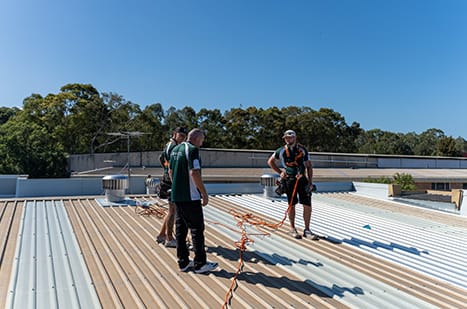
From a WHS perspective, any roofing work conducted on a strata building must comply with the NSW Work Health and Safety Regulation 2025. The owners’ corporation, as the person in control of the workplace, has specific duties around how that work is conducted safely. This extends to ensuring that contractors working on the roof are compliant, rather than assuming they are.
And from an insurance standpoint, most commercial strata building policies require the insured to take reasonable steps to maintain the property. Professional inspection records are the most direct evidence of those reasonable steps being taken.
The Recommended Inspection Frequency for Sydney Strata Roofs
Working from both industry practice and the obligations outlined above, the recommended inspection program for Sydney strata commercial buildings is:
Twice-Yearly Professional Inspections
The baseline for any commercial strata building is two professional inspections per year, scheduled in autumn and spring. Autumn inspections catch the accumulated deterioration from Sydney’s summer UV and heat exposure before the wetter months arrive. Spring inspections identify any damage from the winter rainfall period and prepare the building for the temperature stress of summer.
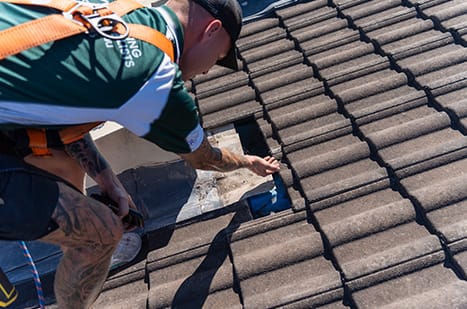
Each inspection should be conducted by a licensed roofing contractor and produce a written report with photographic evidence of condition at key points across the roof plane. Not a verbal summary. A documented report.
Post-Storm Inspections
Sydney’s east coast low events and summer storm season regularly produce rainfall events intense enough to expose existing roof weaknesses or cause new damage. A post-storm inspection targeted at known vulnerable areas, penetrations, skylights, valleys, parapet edges, is a sensible supplement to the regular cycle.
This doesn’t necessarily mean a full professional inspection after every heavy shower. It means a targeted assessment after weather events that are significant enough to potentially have caused damage. If there are tenant reports of water ingress following a storm, that’s obviously a trigger for immediate investigation.
Annual or Biennial Comprehensive Assessments
Beyond the standard twice-yearly inspection cycle, strata buildings with roofs over ten years old benefit from a more comprehensive condition assessment every one to two years. This goes deeper than a standard inspection and includes detailed documentation of material condition across the whole roof, an assessment of residual serviceable life for key components, and clear guidance on the maintenance and capital expenditure required over the next five to ten years.
This type of report is the document that feeds into the capital works fund plan and gives committee members and owners the information they need to make properly informed budget decisions.
Trigger-Based Inspections
Outside the regular schedule, certain events should trigger an immediate professional roof assessment regardless of when the last inspection occurred:
- Any reported water ingress by a tenant or lot owner, even if it appears minor.
- Visible damage to roof materials observed from ground level or accessible areas.
- Following a hailstorm that affected the area, given the damage hail can cause to polycarbonate skylights, metal cladding and membrane roofs.
- When significant rooftop equipment is installed or removed, such as HVAC units or communications infrastructure, these works can disturb flashings and penetration seals.
- Before a major strata levy decision, where roof condition is a material factor in the quantum being requested.
What a Professional Strata Roof Inspection Should Cover
Not all inspections are equal. A contractor who walks the roof for twenty minutes, makes a few notes and sends a one-page summary isn’t providing a useful basis for decision-making. A proper commercial strata roof inspection should systematically cover:
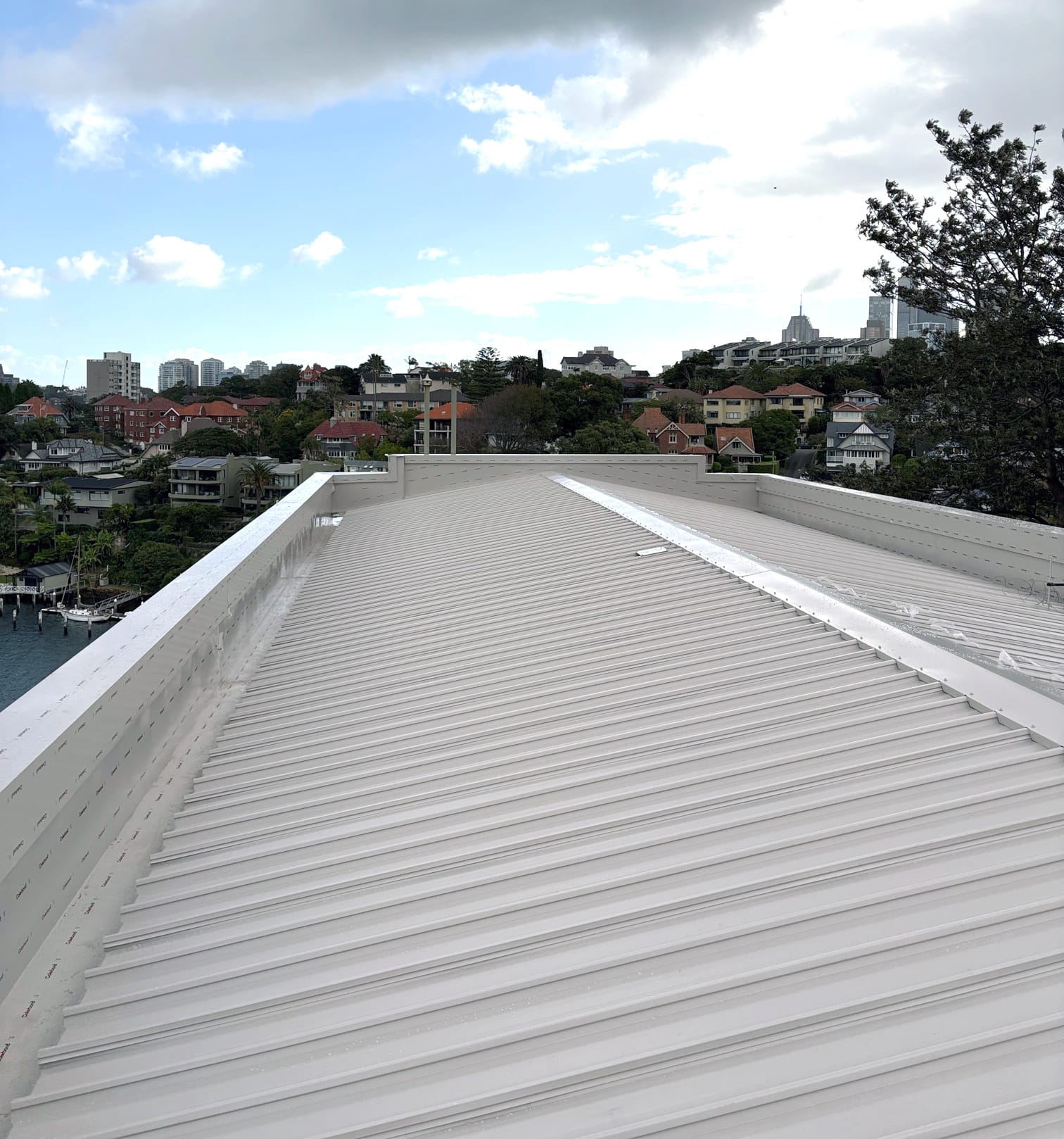
- Roof membrane or cladding condition is assessed across the entire roof plane, including surface oxidation on metal roofs, membrane integrity on flat roofs, and tile condition on pitched roofs.
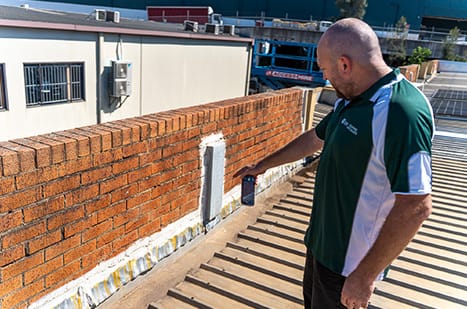
- All flashings at parapets, penetrations, skylights, HVAC mounts, and any location where the roof plane is interrupted. Flashings are where the majority of leaks originate.
- Drainage systems including gutters, box gutters, downpipes, internal sump drains and overflow outlets. Drainage capacity and condition both matter.
- Skylights and roof lights, assessing panel condition for UV degradation, crazing or cracking, and the integrity of perimeter seals and frames.
- Penetrations and service entries, checking sealant condition around all pipes, conduits, vents and other items that pass through the roof.
- Parapet walls and coping, including the waterproofing behind parapet walls, are a commonly missed failure point.
- Roof access hatches and walkways, condition of access infrastructure and safety anchor points where installed.
- Evidence of ponding or drainage issues in flat roof areas.
The report that follows should include photographs of each assessed element, an overall condition rating, a prioritised list of recommended actions, and an indicative timeline for those actions.
Why Frequency Matters: The Compounding Cost of Delayed Inspection
It’s worth being direct about what deferred inspections actually cost strata buildings over time. Minor issues caught at a twice-yearly inspection are typically inexpensive to address. A failing sealant around a penetration, identified early, costs a few hundred dollars to reseal. Left undetected for two years, the same failed seal leads to a leak, water damage in the ceiling cavity, degraded insulation, a more complex repair, and potentially a tenant compensation issue.
That’s not a rounding error. The cost multiplier between early intervention and deferred intervention on commercial roof maintenance is consistently in the range of five to fifteen times. That’s well-established in building maintenance practice, and it’s reflected in what strata committees deal with when reactive repair costs hit the annual budget unexpectedly.
For strata buildings specifically, there’s also the governance dimension. Owners have a right to be confident that the common property is being managed competently. A committee that can produce a consistent inspection record with documented follow-up on identified issues is demonstrating exactly that. A committee that can’t produce inspection records when asked faces a different kind of conversation at the AGM.
Documentation: What to Keep and For How Long
The inspection reports themselves are only useful if they’re retained and accessible. For strata buildings in NSW, roof maintenance documentation should be treated as a permanent part of the building records, not just kept until the next manager comes on board.
The documentation that matters includes:
- All professional inspection reports with photographs, dated and signed by the contractor.
- All repair quotes, work orders and invoices with a clear description of scope and materials used.
- Any contractor certifications, including compliance statements, anchor certifications, and WHS documentation, were provided for works completed.
- Correspondence with building owners or tenants relating to roof condition, reported issues or planned works.
- Capital works fund plan entries that reference roof condition assessments as their basis.
These records serve multiple purposes. They support insurance claims. They demonstrate compliance with the duty to maintain. They protect the committee and strata manager from accusations of negligence. And they give incoming managers or new committee members the context they need to make informed decisions.
The Cost of Getting the Frequency Wrong
The consequences of inadequate inspection frequency for Sydney strata buildings tend to cluster into three categories, and it’s worth being clear about each.
Insurance Claim Denial
When a significant roof-related claim is lodged, and the insurer’s assessor finds evidence of deterioration that predates the claimed event, and there are no inspection records to demonstrate the building was being maintained, the insurer has a strong basis to apply the maintenance exclusion. Strata buildings are not immune to this. The fact that the roof belongs to the owners’ corporation rather than an individual doesn’t change the insurer’s analysis.
Disputes and Tribunal Proceedings
Lot owners who believe the owners’ corporation has failed in its maintenance obligations can apply to NCAT for orders requiring repairs and, in some cases, compensation. Cases where roof maintenance has been demonstrably neglected, with no inspection records and a history of unaddressed tenant complaints, are among the more serious outcomes of poor roof management. The legal and remediation costs in these cases can be substantial.
Unplanned Capital Expenditure
The most common and financially damaging consequence of inadequate inspection is the emergency capital call. A roof that’s been inspected regularly and maintained proactively will reach replacement age in a predictable way, with time for the committee to plan, levy appropriately, and tender the work properly. A roof that hasn’t been inspected can fail unexpectedly, requiring an emergency special levy that owners haven’t budgeted for and may contest.
Frequently Asked Questions
Is there a legal requirement for strata buildings in NSW to have regular roof inspections?
There’s no regulation prescribing a specific interval, but the Strata Schemes Management Act 2015 creates a non-delegable duty to maintain and repair common property. Roofs are common property. Maintaining them requires knowing what condition they’re in, which requires regular professional assessment. The combination of that duty, insurance obligations, and WHS requirements effectively makes a regular inspection program a legal necessity, even if the precise frequency isn’t legislated.
Who is responsible for arranging roof inspections in a strata building?
The owners’ corporation, acting through the strata committee. In buildings with a professional strata manager, the manager will typically coordinate inspections as part of their service scope, but the obligation rests with the owners’ corporation. Committees should ensure their strata management agreement clearly allocates responsibility for arranging and documenting roof inspections.
What qualifications should a strata roof inspector have?
The contractor should hold a current NSW contractor licence for the relevant category of roofing work, carry appropriate public liability insurance, and have demonstrable experience with commercial strata buildings. They should be able to produce a written report with photographic documentation, not just a verbal summary.
How long should strata roof inspection reports be retained?
Roof inspection reports should be treated as permanent building records. NSW strata legislation requires owners corporations to maintain financial and property records, and roof maintenance documentation falls within that scope. As a practical matter, retaining records for the life of the building is the safest approach.
Can a strata committee member inspect the roof themselves to save money?
A committee member can certainly conduct a visual check from accessible areas, and this is encouraged as part of an ongoing monitoring approach. But it doesn’t substitute for a professional inspection for compliance and documentation purposes. Licensed contractors can safely access all roof areas, identify issues that aren’t visible from ground level, and produce a report that meets insurance and governance requirements.
What should a strata roof inspection report include?
At minimum: dated photographic documentation of condition at all key locations, identification of the roof type and the condition of the relevant roofing materials for that system, flashing and penetration integrity, drainage performance, skylight condition, and any identified defects. It should include a prioritised list of recommended actions with indicative timeframes and cost ranges. A good report should be detailed enough that someone reading it twelve months later can clearly understand what condition the roof was in at the time of inspection.
Ivy Roofing provides professional commercial and strata roof inspections across Sydney, with written reports designed to meet insurance and governance requirements. We work regularly with strata managers and committees to establish and maintain proper inspection programs. Call us on 02 9674 4556 or Ivy Roofing to discuss your building’s inspection needs.
Please note that any costs mentioned within this article are fictional, and a proper quote specific to your situation is required.