Leaking roofs are among the most disruptive and costly problems for strata buildings across New South Wales. Water dripping through ceilings, stained plasterboard and damaged personal belongings create immediate stress for residents. They also raise complex questions about responsibility and payment.
Understanding who is legally responsible for fixing and maintaining leaking roofs in strata schemes is essential. It helps with successful insurance claims, accurate cost allocation and avoiding disputes. Recent reforms to NSW strata law have strengthened accountability around common property repairs, including roofs.
This article explains responsibility under the current NSW strata legislation. It outlines the practical steps strata managers and owners should take when leaks occur. It also details compliance obligations and how professional roofing services can support strata clients.
Leaking Roofs in Strata Buildings: Who is Responsible?
NSW strata law creates a clear framework for allocating responsibility between the owners’ corporation and individual lot owners when roof leaks occur.
Owners Corporation Responsibility for Common Property
Under Section 106 of the Strata Schemes Management Act 2015, the owners’ corporation has a strict legal duty to repair and maintain all common property. This duty applies regardless of available funding or other challenges.
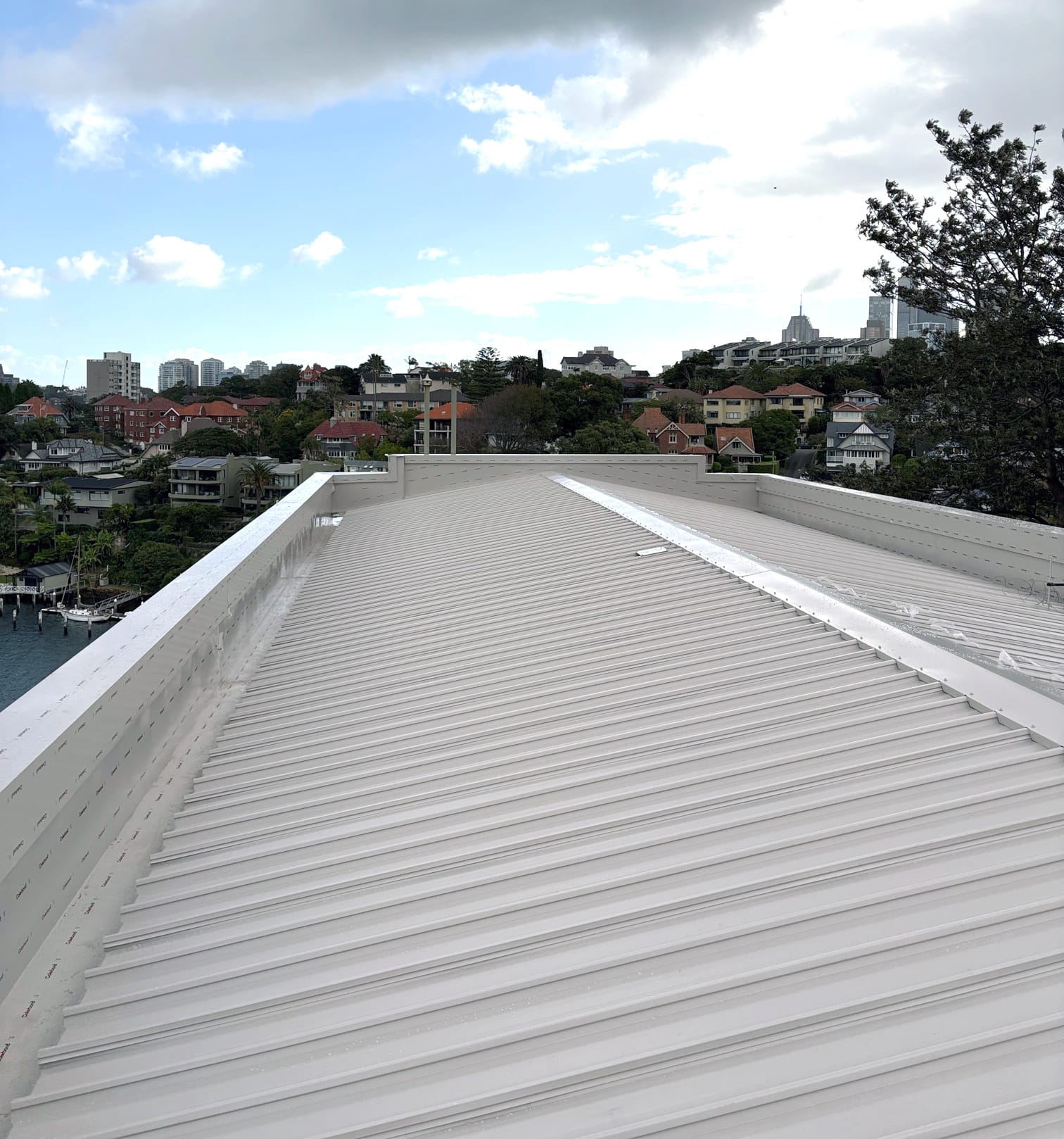
Common property includes areas and structures outside individual lot boundaries. This almost always includes roofs, external walls, structural elements, gutters and downpipes. The roof structure, waterproofing membranes and flashing systems all fall under common property in most strata schemes.
The law is clear: when a roof is leaking, the strata committee must act without delay. Owners’ corporations can no longer put off essential repairs. The time limit for lot owners to take legal action against an owners corporation that fails to maintain common property has also been extended from two to six years. This increases liability and encourages proactive maintenance.
Lot Owner Responsibility
Individual lot owners are responsible for repairs and maintenance within their own properties. This includes interior finishes, fixtures and personal belongings damaged by water that originated from a common property failure.
When water enters a unit from a leaking roof, the lot owner must typically address the internal damage. This can include ceiling repairs, wall restoration and replacing carpet or flooring. However, the owners’ corporation may be liable for these damages if the loss was a reasonably foreseeable result of its failure to maintain the common property.
Shared or Complex Situations
Responsibility can become unclear when leaks originate near boundaries between common property and individual lots, or involve waterproofing membranes shared by multiple owners. Balconies present particular complexity. Some balconies are designated as common property, others as part of individual lots, and some as exclusive use common property subject to specific bylaws.
When responsibility is unclear, strata plans and registered bylaws require careful review to determine exact obligations. The common property memorandum adopted by schemes can provide additional clarity. Strata managers should maintain accessible copies of these governing documents for quick reference during leak investigations.
The fundamental principle remains: roofs are almost always common property and therefore the owners’ corporation’s responsibility unless bylaws or specific lot boundaries explicitly state otherwise.
Why Immediate Action Matters
A prompt response when a roof leak appears protects both property values and legal positions. There are multiple practical and regulatory reasons for swift action.
Avoiding Secondary Damage
Water that enters a building through a roof failure rarely stays contained. Leaks can quickly damage ceiling systems, saturate insulation, stain walls and ruin flooring. What begins as minor water staining can escalate within days to a major remediation project.
Mould growth follows water infiltration within 24 to 48 hours in damp conditions. Once established, mould requires professional remediation and poses health risks. Acting fast can make a dramatic difference to the final repair cost.
Insurance and Compliance Obligations
Strata building insurance policies typically require prompt action to mitigate damage when an insured event occurs. Delays or failure to act when leaks are reported can give insurers grounds to limit or deny claims. Documenting a swift response protects your claim.
New enforcement powers for NSW Fair Trading mean there are real consequences for neglected repairs. Owners’ corporations that delay action on reported leaks now face active compliance monitoring.
Document Everything
Comprehensive documentation protects all parties when leaks occur. Strata committees should immediately document leak reports with dates, times and locations. Photographic evidence, professional assessments, quotes and records of all decisions and completed work are also crucial.
This documentation supports insurance claims, demonstrates compliance with legal obligations and provides clear records for lot owners.
April 2026 Reforms
Further significant changes commence on April 1, 2026. These include mandatory 10-year capital works fund plans using government standard forms, independent qualified surveyor review of initial maintenance schedules for multi-storey schemes, enhanced disclosure requirements on strata information certificates, and prescribed training for strata committee members.
The capital works planning requirement will force systematic forward planning for major maintenance, including roof replacements. Schemes should begin preparing now for these mandatory planning obligations.
Commercial Roof Regulations in Sydney
Strata roof repairs must comply with building codes and workplace safety regulations beyond basic strata law obligations. These compliance requirements help protect workers, maintain insurance and ensure repair quality.
Work Health and Safety Regulations
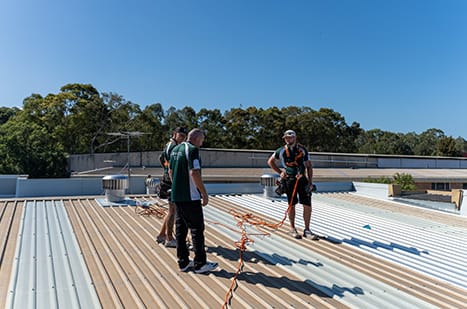
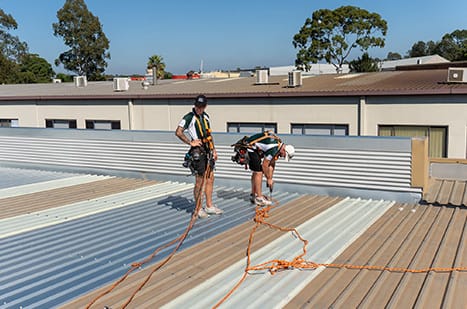
All roof work, including inspections and repairs, must comply with NSW Work Health and Safety laws. The latest regulations continue to strengthen requirements for managing fall risks in elevated workplaces. Safe Work Method Statements documenting hazards, risk assessments and control measures are mandatory before work begins. Personal protective equipment and appropriate fall protection must be used by anyone working at height.
SafeWork NSW has powers to investigate incidents, issue notices, or prosecute serious breaches. Owners’ corporations engaging contractors for roof work must verify that contractors hold appropriate licences, have current insurance, and implement compliant safety measures.
National Construction Code and Australian Standards
Roofing work on strata buildings must meet National Construction Code requirements and relevant Australian Standards. These cover material specifications, waterproofing and flashing details, as well as drainage capacity. Major roof repairs or replacements may require Development Approval and Construction Certificates from local councils. Contractors must hold valid NSW Fair Trading licences for relevant work.
Compliance with these technical standards ensures repairs perform properly and helps maintain building insurance. Work that does not meet requirements can void warranties or create liability for future issues.
Insurance and Council Obligations
Failure to comply with WHS regulations, NCC requirements, or Australian Standards can jeopardise insurance coverage for a strata building. Insurers may deny claims if non-compliant work contributed to the damage, or if required certifications have lapsed. Councils can also issue notices or stop work orders if they detect non-compliant repairs, delaying completion and raising potential legal issues.
Professional roofing contractors understand these layered requirements and deliver work that meets all applicable standards.
How Ivy Roofing Supports Strata Clients
Professional roofing services designed specifically for strata schemes address the unique challenges these properties face. Ivy Roofing provides comprehensive solutions that support strata managers, committees and owners’ corporations.
Professional Roof Inspections and Leak Investigations
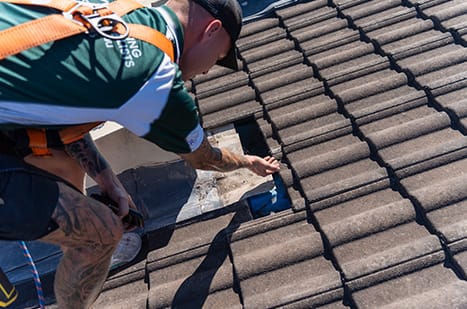
Our detailed diagnostic services identify the true source of leaks, which is critical in strata disputes. Thermal imaging can detect moisture within roof assemblies that is invisible to the naked eye. Our comprehensive reports include photos, a clear explanation of findings, prioritised repair recommendations and accurate cost estimates.
Proper investigation prevents money from being wasted on repairing the symptoms while the source of the leak remains active.
Leak Repairs and Waterproofing Solutions
Our skilled team provides roof repairs that address membrane failures, deteriorated flashings, failed penetration seals and gutter system problems. All work complies with relevant codes and standards, maintaining building insurance coverage.
Compliance-Ready Reporting
Our inspection reports and repair documentation are designed specifically for strata requirements. They can support insurance claims, tribunal proceedings and capital works fund planning. We explain technical findings clearly for committee members without a construction background.
Planned Maintenance Programs
Scheduled roof maintenance prevents leaks through early detection and repair of developing issues. Our programs include pre-rain season inspections, post-storm damage assessments and routine drainage cleaning. This documented maintenance history demonstrates compliance with insurance and legal obligations.
Final Thoughts
Leaking roofs in strata buildings create immediate disruption and complex legal questions. NSW strata law is clear: the owners corporation has a strict obligation to maintain and repair all common property, including roofs.
Recent legal reforms have strengthened these obligations, with real enforcement consequences for schemes that neglect their duties. Clear documentation, timely action and regulatory compliance are essential when leaks occur. Strata managers and owners’ corporations should engage professional roofing specialists who understand both the technical challenges and the legal framework.
Contact Ivy Roofing today for expert roof inspections, strata-ready compliance documentation and reliable repairs. Our Sydney-based team understands strata law obligations and delivers professional solutions for strata schemes across New South Wales.
Please note that any costs mentioned within this article are fictional, and a proper quote specific to your situation is required.