Strata roof decisions are rarely straightforward. You’ve got owners’ corporation budgets to consider, maintenance funds that may or may not be adequate, competing priorities across the building, and the practical challenge of getting agreement on major capital works. The roof tends to get deferred until it becomes impossible to ignore.
The problem with deferring is that the difference between a roof that needs significant repairs and a roof that needs full replacement is often a matter of timing. Catch it at the right point, and a restoration or targeted repairs extend the life for another decade. Leave it too long, and you’re looking at a full replacement with a much bigger price tag and more disruption to residents.
Age Alone Isn’t the Full Picture, But It’s the Starting Point
Different roofing materials have different expected lifespans in Sydney’s climate, and understanding where your building sits on that curve is the first step.
- Terracotta tiles, which are common on older Sydney strata buildings, have a theoretical lifespan of 50 years or more for the tiles themselves. But the pointing, bedding, and flashing system that makes a tiled roof watertight typically has a functional life of 15 to 25 years. So a 30-year-old terracotta tiled building may have perfectly good tiles on a failing waterproofing system.
- Concrete tiles have a slightly shorter expected lifespan, typically 25 to 40 years. They’re heavier than terracotta, absorb more moisture over time, and in Sydney’s coastal zones can be more susceptible to surface degradation from salt air.
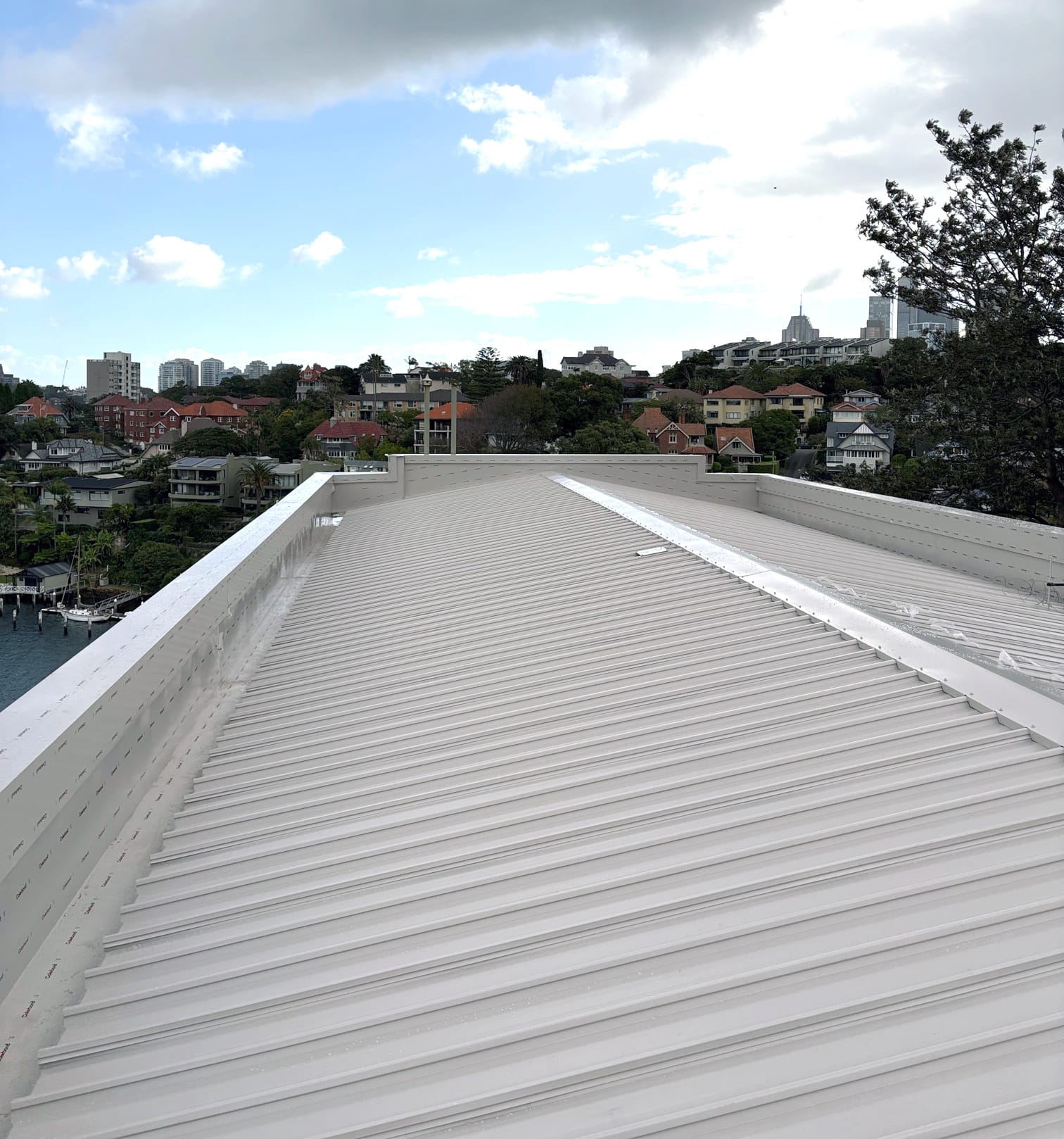
- Colorbond metal roofing on strata buildings, particularly on flat-roof sections or extensions, typically runs 20 to 30 years before significant maintenance or replacement is warranted.
- Membrane flat roofs, on modern strata rooftops or over common areas, generally have a functional life of 15 to 25 years, heavily dependent on maintenance history and the quality of the original installation.
So if your strata building is over 20 years old and the roof hasn’t had a comprehensive inspection in the last couple of years, that’s the starting point.
Physical Signs the Roof Is Struggling
These are the indicators we look for when assessing strata roofs across Sydney for end-of-life status.
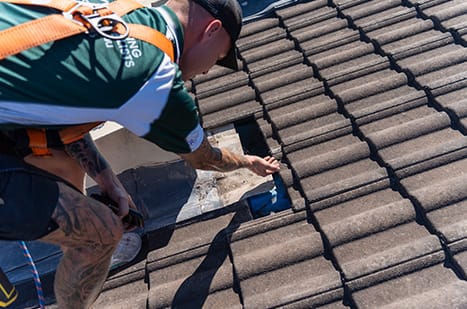
- Multiple broken or missing tiles: When roof tiles are visibly cracked, broken, or missing in multiple locations, it’s not just a matter of replacing those individual tiles. Each one was likely damaged by the same underlying cause, thermal stress, structural movement, or materials degradation, and the pattern will continue.
- Significant moss and lichen coverage: Widespread moss, lichen, or algae across a tile roof is a sign of degraded surface coatings and moisture retention. It’s a symptom suggesting the tiles are beyond the point where cleaning and treatment are a long-term solution.
- Exterior watermarks and staining: Dark watermarks or staining along parapet walls, around chimneys, or on external walls near the roofline indicate sustained water ingress that’s been happening for some time.
- Ponding water on flat sections: For strata buildings with flat roof sections, standing water visible after rain is a sign that drainage is failing or the roof deck has deflected. Both accelerate membrane deterioration significantly.
- Deteriorated roof space condition: If internal inspections show wet or compressed insulation, water-stained sarking, or damp timber, the roof has been leaking for longer than any visible interior signs might suggest.
- Widespread pointing failure: Crumbling or hollow mortar on ridge caps and hips means the bedding system is failing. Widespread pointing failure on a large strata building generally isn’t economically repairable in isolation at that scale.
What a Proper End-of-Life Assessment Looks Like
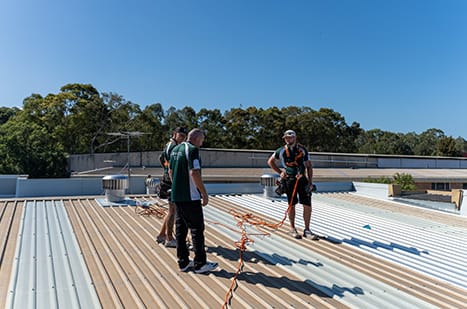
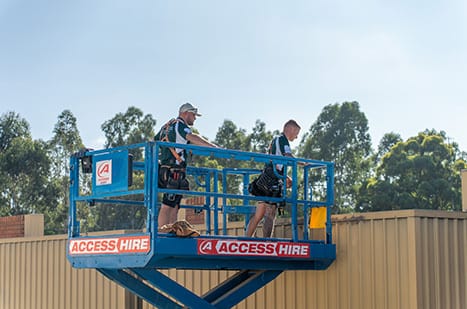
A proper end-of-life assessment for a strata roof goes beyond a walk-around and a ballpark figure. For a strata committee and owners’ corporation to make a sound decision about whether to repair, restore, or replace, they need a proper condition report.
That means a physical inspection of the entire roof surface, including all penetrations, flashings, valleys, and drainage points. It should include the roof space inspection if access allows, photography and documentation of all identified issues, and a clear assessment of remaining serviceable life.
The report should give the committee three scenarios: what happens if only the immediate repairs are done, what a restoration approach involves and how long it buys, and what full replacement looks like in terms of scope and expected lifespan.
Ivy Roofing produces written roof condition reports for strata buildings across Sydney. These reports are structured to support the capital works planning process and give the owners’ corporation documented evidence of the roof’s condition, which is also relevant for insurance compliance and sinking fund planning.
Repair vs Restore vs Replace: How to Think About It
Not every strata building with an aging roof needs full replacement. A roof restoration, involving high-pressure cleaning, re-bedding and pointing of ridge caps, flashing replacement, and a protective coating, can add 10 to 15 years to a tile roof that’s structurally sound but showing surface deterioration and failing mortar. It’s a significantly smaller expense than full replacement and makes sense when the tiles themselves are in reasonable condition.
Full roof replacement is the right call when the tiles are compromised, when there’s structural movement affecting the roof’s geometry, when previous repairs have been so piecemeal that the whole system has lost integrity, or when the owners’ corporation has a strategic reason to upgrade the roofing material.
Getting this decision wrong in either direction is costly. Spending money on a restoration that buys two years of life before the underlying problems resurface is wasteful. Spending on a full replacement when a restoration would have done the job for another decade is also wasteful. A proper condition report makes the difference.
Frequently Asked Questions
How often should a strata building’s roof be professionally inspected?
Every two years at a minimum, and annually once the building is over 20 years old. Condition reports should be part of the strata committee’s regular capital works planning and documentation. Many strata buildings defer inspections until a problem is reported, which is too late for effective preventive planning.
Who is responsible for roof maintenance on a strata building?
The owners’ corporation is responsible for maintaining common property, which includes the roof. This is typically funded through the administrative fund for ongoing maintenance and the capital works fund for major repairs and replacement. The strata manager usually coordinates the work on behalf of the owners’ corporation.
Can a strata roof be partially replaced rather than fully?
Sometimes. If the failure is concentrated in a specific section, a partial replacement or significant repair to that section can be appropriate. However, if the issue is age-related deterioration across the whole roof, partial works often create a mismatch, and the remainder of the roof reaches the same failure point shortly after.
What does a strata roof restoration involve?
Typically, high-pressure cleaning to remove moss and contamination, re-bedding and repointing of ridge and hip caps, replacement of failed flashings, repairs to broken or damaged tiles, and application of a tile coating or sealer. Done correctly, this can extend a tile roof’s serviceable life by a decade or more.
How should a strata committee approach the decision to replace a roof?
Start with a professional condition report from an independent roofing specialist. Use this to inform the capital works fund planning. Get multiple quotes based on a consistent scope. Ensure the owners’ corporation understands the trade-offs between repair, restoration, and replacement before committing.
How does a failing roof affect strata property values?
Significantly. A building with a documented roof problem or a history of leak complaints will affect valuations and saleability of individual lots. Conversely, a recent roof restoration or replacement is a positive item in a strata building’s capital works history and gives prospective buyers confidence.
Ivy Roofing is a Sydney-based roofing specialist. We work with homeowners, property managers, and strata across Sydney to keep roofs in top condition. Get in touch with us to see how we can help you.
Please note that any costs mentioned within this article are fictional, and a proper quote specific to your situation is required.