Roof leaks rarely announce themselves. They don’t start with a sudden gush of water through the ceiling. They start with a small entry point somewhere on the roof surface, often invisible from the ground, and they travel. By the time most Sydney homeowners notice anything, the water has already been finding its way in for weeks, sometimes longer.
Understanding how leaks actually start, the specific failure points on a Sydney home’s roof, is the most useful thing you can know as a homeowner. Because catching them early is the difference between a straightforward repair and a much bigger job involving ceilings, insulation, and the kind of mould problem you don’t want to deal with.
The Most Common Starting Points for Roof Leaks in Sydney
There are patterns to where roof leaks begin, and they’re worth knowing. Most leaks on Sydney residential roofs start at one of these points.
Flashings at Roof-to-Wall Junctions
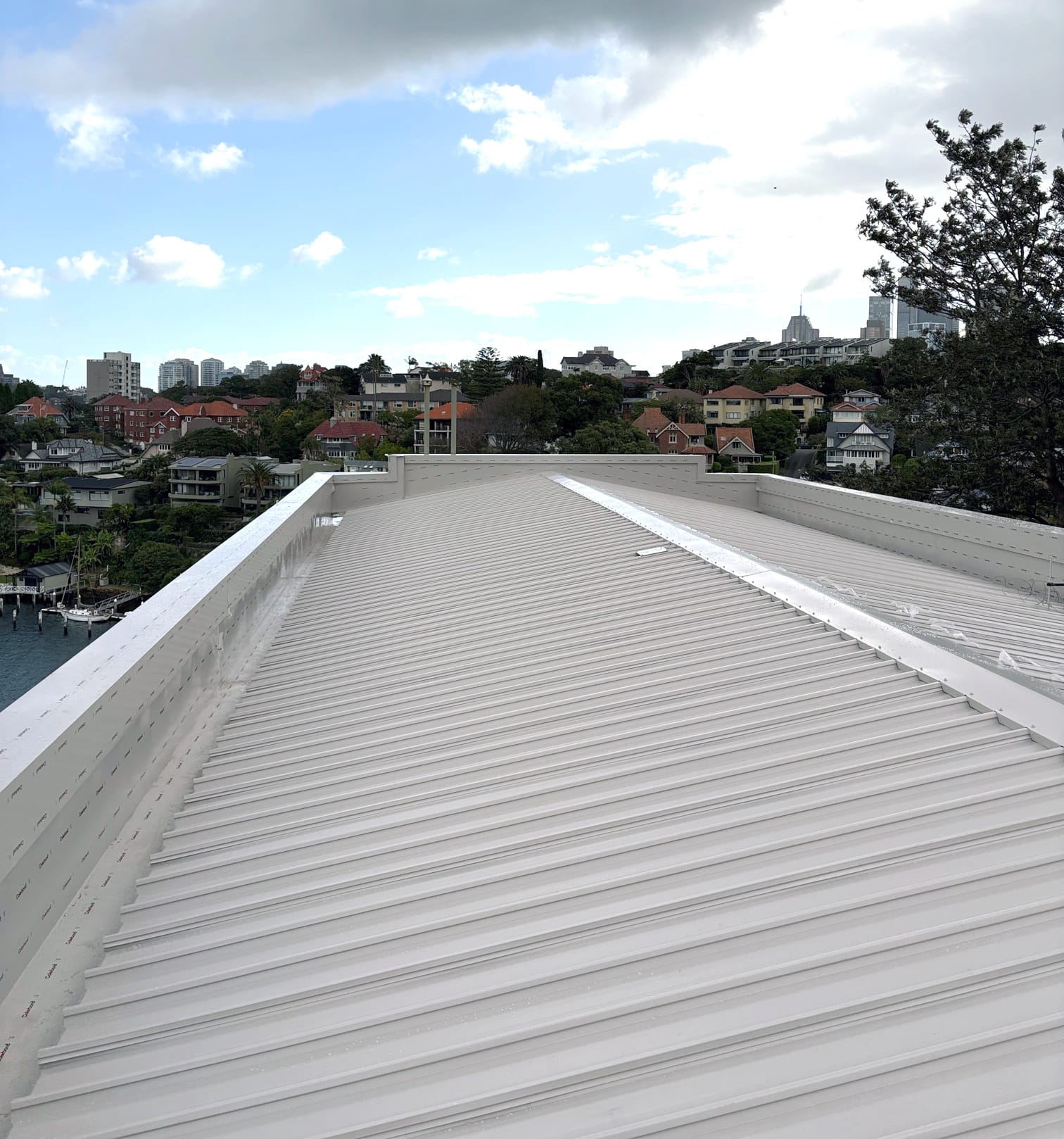
Anywhere a roof surface meets a vertical wall, there’s a flashing. These are the metal strips that seal the gap between the two surfaces and direct water away from the join. In Sydney homes, you’ll find them where a roof meets a chimney, where a skillion extension joins the main house wall, and around parapet walls.
Flashings are a maintenance item. The sealant that holds them in place dries out and cracks, the metal can corrode, and they can lift away from the wall surface over time. Sydney’s UV exposure accelerates this, and a flashing that was installed 15 years ago is likely overdue for inspection, even if it hasn’t obviously failed yet.
Valley Flashings Where Two Roof Planes Meet
The valleys on a tiled roof, where two pitches come together in a V, carry enormous amounts of water during heavy rain. They’re lined with a metal flashing channel, and when that flashing corrodes, rises at the edges, or accumulates debris, water starts to find its way underneath rather than through the channel.
Valley failures are a very common cause of roof leaks on older Sydney homes, particularly those with terracotta tiles where the roof has been in place for 20 years or more. It’s one of the issues we see regularly across our service areas, from the Hills District to North Shore properties. The tiles themselves look perfectly fine. The problem is underneath them at the valley line.
Failed Pointing and Bedding on Ridge Caps
Ridge caps, the row of tiles or concrete sections running along the peak of a roof, are mortared in place with a bedding and pointing system. This mortar is exposed to more thermal cycling and UV than any other part of the roof, and it fails. The bedding beneath the cap starts to crack and hollow out. The pointing, the visible cement face on the cap’s edges, shrinks and cracks away from the tile.
When this happens, the ridge cap is no longer waterproof. Rain gets under it, and it goes straight into the roof space. This is probably the single most common leak source on tile roofs across Sydney, and it’s not visible without getting up there.
Around Roof Penetrations
Every pipe, vent, skylight, or exhaust that comes through the roof surface is a potential entry point. Each one relies on a flashing collar or boot seal around its base to keep water out. These seals are rubber or silicone-based, and they degrade with age and UV exposure.
Sydney homes with solar hot water systems, older skylights, or gas flue pipes are particularly worth checking. These penetrations are often original and may not have had their seals replaced since installation.
Cracked, Broken, or Slipped Tiles
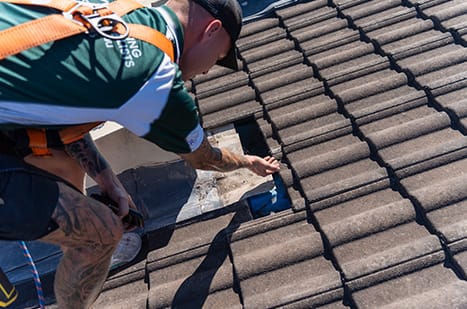
A broken tile or a tile that’s slipped out of position is a direct entry point. On its own, a single broken tile is a quick repair. The problem is that tiles don’t always break cleanly in a way that’s visible from the ground, and a hairline crack might only leak during heavy or wind-driven rain.
How Water Travels Once It Gets In
This is important to understand because it explains why your ceiling stain might not be directly below the actual leak point.
Once water gets through the outer roofing layer, it typically hits the sarking (the foil or membrane underlayer) if there is one, or goes straight to the timber roof framing. From there, it travels. It runs along the sarking until it finds a gap, drips onto a rafter, runs along the rafter towards the wall, or pools somewhere until it soaks through the ceiling lining.
So a ceiling stain in the middle of the lounge room can easily originate from a failed flashing at the ridge three or four metres away. Tracing a leak properly means getting on the roof and following the path of travel, not just patching directly above the ceiling stain. This is one of the most common mistakes with DIY or inexperienced repair attempts.
How to Catch Roof Leaks Before They Become a Problem
You don’t need to be a roofer to spot the early warning signs. These are the things worth checking on a Sydney home, particularly before and after the winter wet season.
- Look along the ridge from the ground with binoculars if needed. Gaps in pointing, caps that look slightly off-line, or any visible cracking are signs worth investigating.
- Check gutters for sediment of fine tile grit after rain. This is granules washing off deteriorating tiles and is an indicator of surface degradation.
- Look at the ceiling in rooms directly below the roof space after heavy rain. Any new staining, soft patches, or paint bubbling warrants investigation.
- Check the roof space if you can access it safely. Wet or discoloured sarking, water staining on timber, or damp insulation are clearer than any external sign.
- After any significant storm, do a quick visual walk around the exterior. Valley lines, wall-to-roof junctions, and visible ridgelines are the places to look.
When to Call a Roofing Professional
If you’ve spotted any of the warning signs above, don’t wait for a visible drip before calling someone. A roof inspection to identify and locate potential entry points costs far less than the repair scope that results from a properly established leak running through winter.
Ivy Roofing carries out leak detection and roof inspections on Sydney residential properties throughout the year, across areas including the Hills District, Western Sydney, North Shore, and Inner West. If you’re concerned about your roof’s condition or have spotted any of the signs mentioned in this article, get in touch for an assessment.
Frequently Asked Questions
Why is my roof leaking only during heavy rain?
This usually means the entry point is marginal, a crack or gap that allows water in under high flow conditions but not light rain. Common causes are cracked pointing that admits water only when the ridge is saturated, lifted flashing edges that seal under their own weight in light rain but lift in wind-driven heavy rain, or a hairline tile crack. Intermittent leaks are worth investigating as they indicate a failure that will progress.
Can I find a roof leak myself?
You can identify warning signs from the ground and the ceiling, but accurately locating the entry point usually requires a physical inspection on the roof. The tracking behaviour of water in a roof space makes the origin point genuinely hard to identify without access. Attempting repairs without locating the actual entry point often means the repair misses the source.
How much roof damage can a leak cause if left untreated?
Significant. Wet insulation loses its thermal performance and becomes a mould risk. Sustained moisture in timber framing can lead to rot and structural weakening over time. Ceiling sheets are expensive to replace once saturated. Interior mould remediation adds considerably to the total repair cost. The cost grows the longer a leak is left.
What causes roof leaks after storms in Sydney?
The most common storm-related causes are dislodged ridge caps, lifted or broken valley flashings, cracked or broken tiles from impact, and wind-driven rain forced through marginal joins. Sydney’s westerly storm fronts push rain at angles that expose different vulnerabilities than summer rain, which is why some leaks appear only after specific storm types.
How long does a roof leak repair take?
Most straightforward roof repairs, such as repointing a ridge section, replacing a flashing, or sealing a penetration, are completed in a day or less. Larger repairs or those requiring scaffolding access take longer. The investigation to properly locate the leak source is as important as the repair itself.
Is roof leak repair covered by home insurance?
Generally, storm damage that causes a leak is covered. Leaks from wear and tear or deferred maintenance typically are not. The distinction often comes down to the condition of the roof before the event. Well-maintained roofs with documented inspection history are in a much better position when an insurance claim is needed.
Ivy Roofing is a Sydney-based roofing specialist. We work with homeowners, property managers, and strata across Sydney to keep roofs in top condition. Get in touch with us to see how we can help you.
Please note that any costs mentioned within this article are fictional, and a proper quote specific to your situation is required.