A drip showing up on the third floor after heavy rain feels like a minor inconvenience. A bucket, a call to the contractor, and a bit of sealant applied over the weekend. Problem solved. Except it usually isn’t, and the real cost of that leak is often ten to twenty times what the initial repair bill suggests.
Roof leaks in commercial buildings have a way of being deceptively expensive. The visible damage, a water stain on a ceiling tile or a damp patch on carpet, is rarely the full picture. By the time a leak is showing up internally, it’s already been sitting in the roof structure for some time. This article walks through the genuine cost chain of commercial roof leaks in Sydney, from the first complaint to the worst-case structural outcomes, and what property managers can do to interrupt that chain early.
Why Commercial Roof Leaks Cost More Than They Appear
The gap between the visible damage and the actual damage is what makes commercial roof leaks so expensive. Water that penetrates a roof membrane doesn’t usually travel straight down. It follows the path of least resistance, running along purlins, pooling in ceiling cavities, soaking into insulation batts, and sometimes travelling several metres from the entry point before it appears at ceiling level. So that stain above the photocopier might actually be originating from a failed flashing near the air conditioning unit on the other side of the roof.
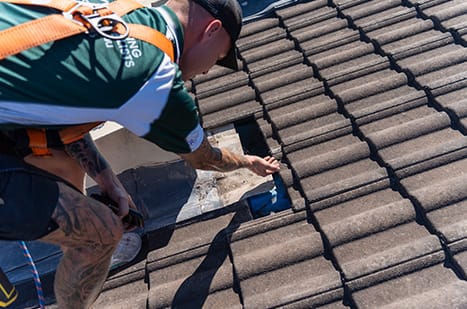
This is why leak investigations matter. A contractor who goes up, finds the obvious suspect, applies sealant and calls it done is solving the symptom. They may not have found the source. And if the source isn’t fixed, the water keeps moving, quietly, until the next visible sign appears somewhere else.
The Real Cost Chain: Stage by Stage
Stage 1: Tenant Complaints and Business Disruption
The first sign of a commercial roof leak is almost always a tenant complaint. And while that complaint might seem like a minor operational issue, it sets off a chain of obligations and costs that property managers need to understand.
Under most commercial leases in NSW, the landlord or building owner has a responsibility to maintain the property in a condition fit for its stated use. A leak that interferes with a tenant’s ability to operate, whether it’s water near electrical equipment, damage to stock, or simply an unusable workspace, can trigger lease remedies. Depending on the lease terms, that might mean rent abatement, a claim for consequential losses, or, in persistent cases, a right to terminate.
And why would a tenant accept disruption without pushing back? Particularly if they’ve raised the issue before and it hasn’t been properly resolved. The first complaint is a warning. Repeated complaints, with a paper trail, become a liability exposure.
Beyond lease risk, there’s the practical disruption cost. Relocating staff, protecting equipment, coordinating after-hours access for repairs, and managing communications with other tenants in a strata or multi-tenancy building. None of that appears on the roofing invoice, but it all has a cost.
Stage 2: Internal Damage to Building Fabric and Fit-Out
Once water has made it past the roof membrane, it starts working on everything beneath. The direct internal damage costs from commercial roof leaks in Sydney typically fall into several categories:
- Ceiling systems: suspended ceiling tiles absorb moisture, stain, sag and eventually fail. Replacing a section of grid and tiles across a commercial floor plate is not cheap, particularly if the tiles contain older materials.
- Floor coverings and fit-out: water that travels down walls or columns reaches floor level and damages carpet, vinyl and timber flooring. Tenant fit-out that’s been water-damaged becomes a dispute about who bears the cost.
- Electrical systems: water near light fittings, junction boxes, or power distribution equipment is a safety hazard and requires assessment by a licensed electrician before the area can be safely reoccupied. In some cases, fittings need replacement.
- Insulation: roof insulation that has absorbed moisture loses its thermal performance and becomes a persistent source of dampness. Wet insulation doesn’t dry out effectively once it’s saturated. It usually needs to be removed and replaced.
- Plasterboard walls and partitions: prolonged moisture causes plasterboard to swell, buckle and grow mould. This is particularly common in multi-storey buildings where a leak from an upper floor affects walls and partitions across multiple levels.
Each of these adds to the cost in parallel. A leak that’s been active for weeks before it was noticed can generate internal repair costs that dwarf the roofing repair bill itself.
Stage 3: Mould and Air Quality Issues
Mould is one of the more serious downstream consequences of roof leaks, and one of the more expensive to remediate properly. In Sydney’s humidity, mould can establish in a ceiling cavity or behind a wall within 24 to 48 hours of moisture exposure. Once it’s established, it spreads.
For commercial buildings, mould isn’t just a maintenance issue. It’s a WHS issue. Building owners and property managers have a duty of care to ensure the workplace is safe. Mould exposure has documented health effects, and if tenants or building occupants develop symptoms attributable to mould in the building, the liability implications are serious.
Professional mould remediation in a commercial building, depending on the extent, involves containment, air scrubbing, removal of affected materials and independent clearance testing. It’s significantly more expensive than the initial leak repair and entirely avoidable with early intervention.
Stage 4: Structural Deterioration
The most serious and expensive consequence of unresolved commercial roof leaks is structural deterioration. This is where the cost stops being a maintenance budget conversation and starts being a capital expenditure emergency.
The structural elements most vulnerable to sustained water exposure in commercial buildings include:
- Steel purlins and roof framing: prolonged exposure to moisture causes surface oxidation that, if left untreated, progresses to section loss. A purlin that has lost 20 to 30% of its cross-section through corrosion may no longer meet the original structural loading requirements.
- Timber roof framing: less common in commercial buildings but present in older Sydney properties, timber exposed to moisture is vulnerable to rot and termite activity. Structural timber damage is expensive to remediate and disruptive to access.
- Concrete slab soffit deterioration: water that reaches reinforced concrete and sits there causes the cover concrete to carbonise and the reinforcing steel to corrode and expand, a process called spalling. Spalled concrete can detach from the soffit, which creates a safety hazard.
- Connection points and fixings: bolted and welded connections in steel structures are particularly vulnerable to corrosion at points where water pools or runs. Fixing failure in a roof structure is a significant engineering problem.
The economics of structural repair are a different order of magnitude from maintenance repair. Remediation of corrosion damage to structural steel elements in a commercial building, including access, treatment, and independent engineering certification, can easily run into hundreds of thousands of dollars. Not talking about a full re-roof here. Just the structural remediation work before the new roof goes on.
Stage 5: Regulatory and Insurance Consequences
Beyond the direct repair costs, unresolved structural damage from roof leaks creates regulatory and insurance exposure that compounds the financial impact.
A commercial building with known structural deficiencies may require a structural engineer’s assessment before it can continue to be occupied. In some circumstances, SafeWork NSW or the local council can require partial or full vacation of a building that presents a safety risk. The business interruption costs from a forced evacuation are substantial.
From an insurance perspective, if a claim is lodged and the investigation reveals that the structural damage resulted from a long-standing leak that was known and not properly addressed, the insurer has grounds to deny or limit the claim. The maintenance exclusion applies here just as it does to surface repairs.
What the Total Cost Actually Looks Like
To make this concrete: consider a mid-sized commercial tenancy of around 500 square metres that has had an active roof leak for six months before it’s properly diagnosed and repaired. A realistic cost breakdown might include:
- Roof investigation and permanent repair: $3,000 to $8,000, depending on access and scope.
- Ceiling tile replacement across the affected area: $2,000 to $5,000.
- Electrical assessment and fitting replacement: $1,500 to $4,000.
- Insulation removal and replacement: $2,000 to $6,000.
- Mould remediation if established: $5,000 to $20,000+, depending on extent.
- Flooring and fit-out repairs: variable, but $3,000 to $15,000 in a commercial tenancy context.
- Tenant compensation, rent abatement or legal costs: highly variable, but $5,000 to $50,000 is a realistic range for a contested commercial lease dispute.
That’s a total potential exposure of $21,500 to $108,000 from a leak that could have been caught and resolved in a routine inspection for a fraction of that amount. And that’s before structural damage enters the picture.
How to Interrupt the Cost Chain Early
The obvious answer is inspection and maintenance. But the specifics matter, because not all inspection programs are equal.
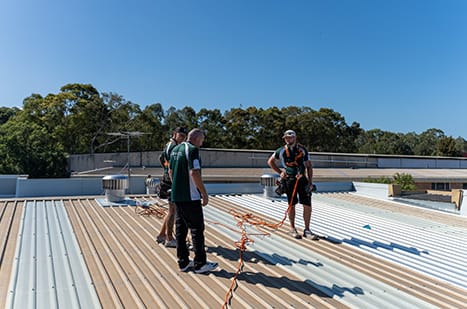
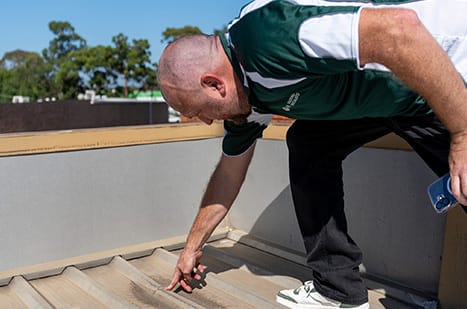
A commercial roof inspection that ticks the compliance box but misses the failed flashing in the low-traffic section above the plant room isn’t worth much. What property managers should be looking for in a commercial roofing inspection program:
- Systematic coverage of the entire roof plane, not just the areas that are obviously accessible or where previous problems have been. Low points, penetration clusters, valley junctions, and parapet edges all need to be assessed.
- Written reports with photographs that document the condition at specific locations. These create a baseline for comparison at the next inspection and are invaluable if an insurance claim follows.
- Clear prioritisation of findings: not every identified issue is urgent. A good inspection report distinguishes between immediate action items, scheduled repairs, and items to monitor, so property managers can allocate resources appropriately.
- Post-storm inspections as a supplement to the regular cycle. Sydney’s east coast low events can cause damage that wasn’t present at the last scheduled inspection. A targeted assessment after a major weather event is a sensible addition to any commercial roof management program.
Also worth noting: the contractor doing the inspection should be the same contractor capable of doing the repairs. Not because you’re obligated to use them, but because a contractor who inspects a roof and knows they’ll be asked to quote on any repairs found is motivated to be thorough.
Frequently Asked Questions
How long does it take for a roof leak to cause structural damage?
It depends on the materials involved and the volume of water. Surface corrosion on steel structural elements can begin within months of sustained moisture exposure. Significant section loss that affects structural integrity typically develops over a period of years, not weeks. However, some structural materials, particularly timber in older buildings, can deteriorate more rapidly if the moisture load is high. Early intervention always limits the extent of damage.
Am I, as a property manager, liable if a tenant suffers loss due to a roof leak?
Potentially yes, depending on your management agreement, the lease terms, and whether you can demonstrate that appropriate maintenance and inspection obligations were met. If a leak was previously reported and not properly addressed, your exposure increases. Documented maintenance records and prompt responses to reported issues are your main protection.
Is mould from a roof leak covered by building insurance?
Most commercial building policies cover sudden water damage events but exclude gradual deterioration and its consequences. Whether mould remediation is covered depends heavily on whether the insurer accepts that the water ingress was sudden and accidental rather than the result of deferred maintenance. Getting a professional inspection report that clearly documents the condition before and after a weather event is important for this reason.
What’s the best way to detect a roof leak before it shows internally?
Professional roof inspection is the most reliable method. Experienced roofing contractors can identify the physical signs of developing waterproofing failure, degraded sealants, lifted flashings, deteriorated membranes, and ponding areas before those failures become active leaks. Infrared thermography is also used in some commercial inspections to detect moisture in roof assemblies that isn’t yet visible.
How often should a commercial roof be inspected in Sydney?
Twice a year is the standard recommendation for commercial properties, ideally in spring and autumn. Buildings near the coast, or those with known problem areas, may benefit from more frequent checks. Post-storm inspections after significant weather events are also advisable, regardless of the regular schedule.
What should I do if I discover internal water damage in a commercial tenancy?
First, protect the area and any at-risk equipment or stock. If water is near electrical infrastructure, isolate the circuit and get an electrician to assess before reoccupation. Document everything with photos and video before any cleanup or repairs begin. Notify your insurer promptly and engage a commercial roofing contractor for an investigation to find and address the actual source, not just the visible damage.
Ivy Roofing specialises in commercial roof leak investigations and maintenance programs for Sydney commercial and strata properties. We find the actual source, not just what’s visible, and give you a clear picture of what the repair involves. Call us on 02 9674 4556 or visit ivyroofing.com.au to arrange an inspection.
Please note that any costs mentioned within this article are fictional, and a proper quote specific to your situation is required.